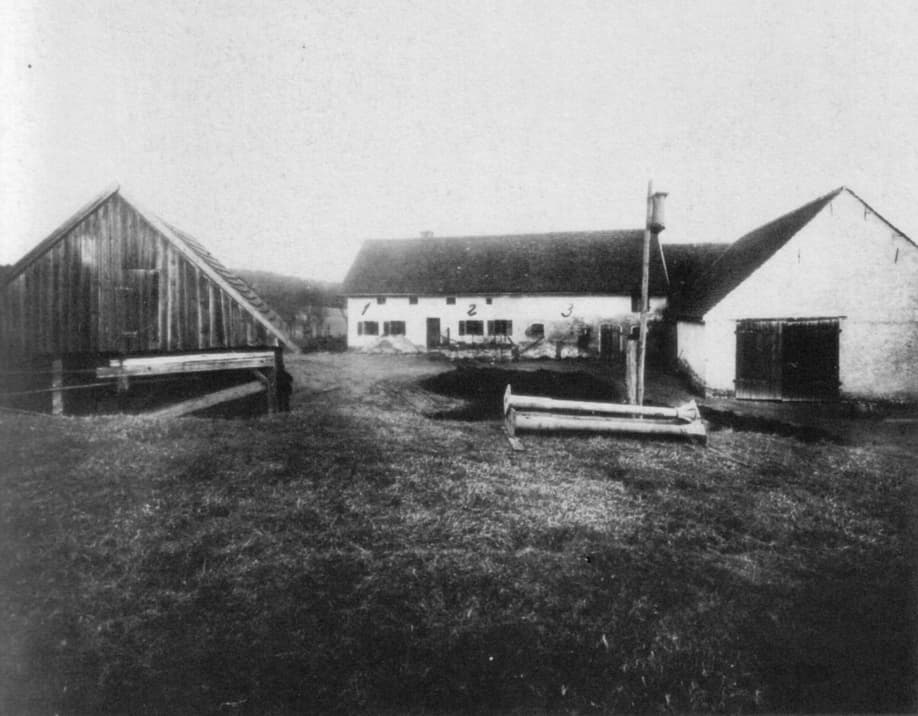
Some crimes are frightening because of what was done. The Hinterkaifeck case is frightening because of everything that surrounds it — the weeks of small, wrong details that no one could explain, and the days of ordinary domestic calm that followed the killings while six people lay dead. More than a century later, it remains one of the most studied unsolved murders in German history, and arguably the eeriest. The horror here is not spectacle. It is the slow, patient sense that someone was already inside the family's world long before the night everything ended.
To understand why this case has held its grip for a hundred years, it helps to know the shape of the world it happened in. Germany in 1922 was a country still reeling from the First World War and sliding into the runaway inflation that would soon make banknotes worthless. Rural Bavaria was deeply Catholic, poor, and insular; farms were passed down within families, neighbors knew one another's business, and a household's absence from Sunday Mass was the kind of thing a whole parish would notice. There was no telephone at Hinterkaifeck, no quick way to summon help, and — crucially — no modern forensic machinery standing ready. Fingerprinting existed but was inconsistently used. Police work in the countryside leaned on confession, gossip, and the physical scene. Hold all of that in mind, because it explains both how the killer could operate undisturbed and why the truth slipped away so completely.
I have kept a file on this case for years, and the item I return to is not the barn. It is the newspaper. A paper nobody in the household had bought, from a place nobody in the area subscribed to, found lying on the property in the weeks before. Everything else in the precursor record can be argued away as a frightened man's imagination — noises, tracks in snow that thawed. The newspaper was an object. Someone put it down.
A farm at the edge of the trees
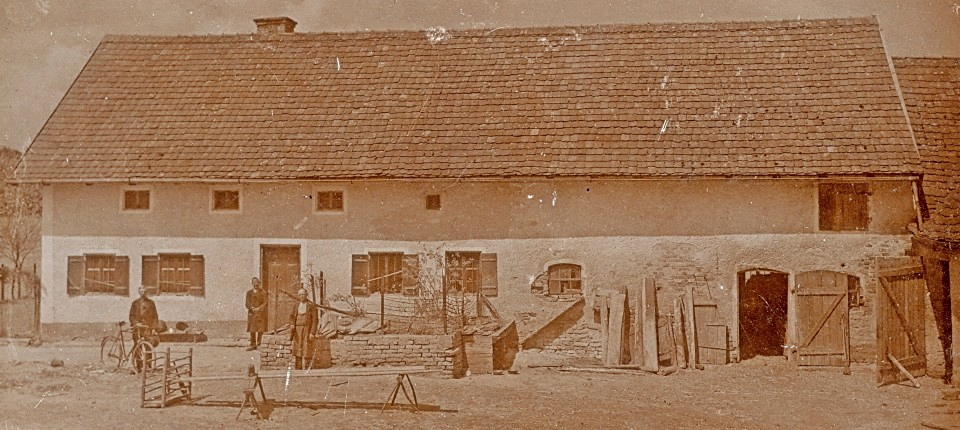
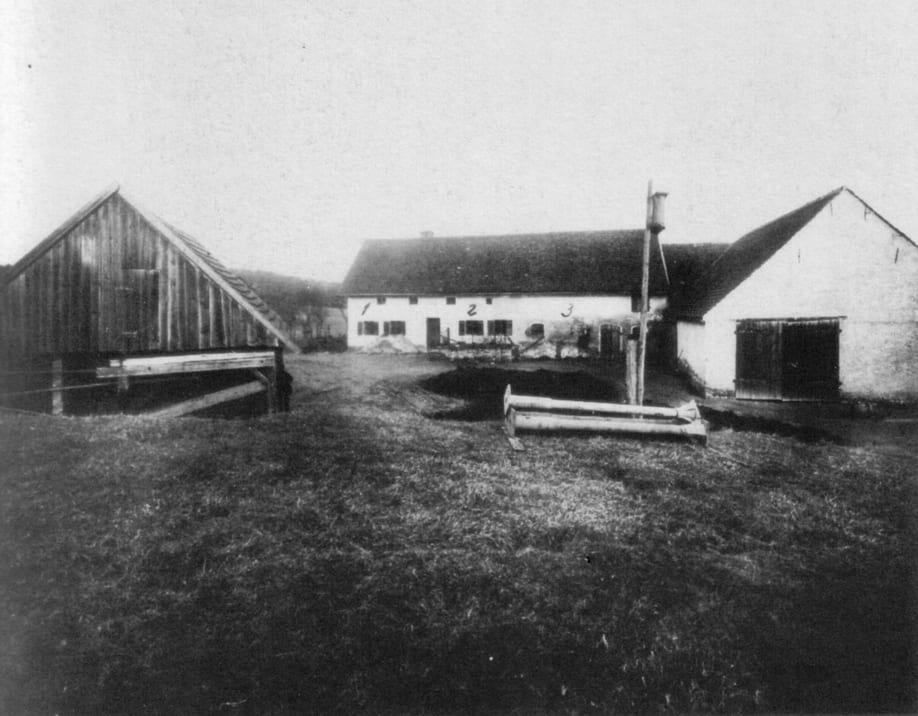
Hinterkaifeck was never a village. It was a single farmstead, a cluster of house and barn joined under connecting roofs, standing alone in the fields roughly 70 kilometers north of Munich, in rural Bavaria. The nearest hamlet, Gröbern, was a short walk away, but the farm itself sat apart, backed by woodland and reachable mainly by a track across open ground. In the winter of 1922 it was the kind of place where a stranger could not approach unseen in daylight — and where, at night, no one would come at all.
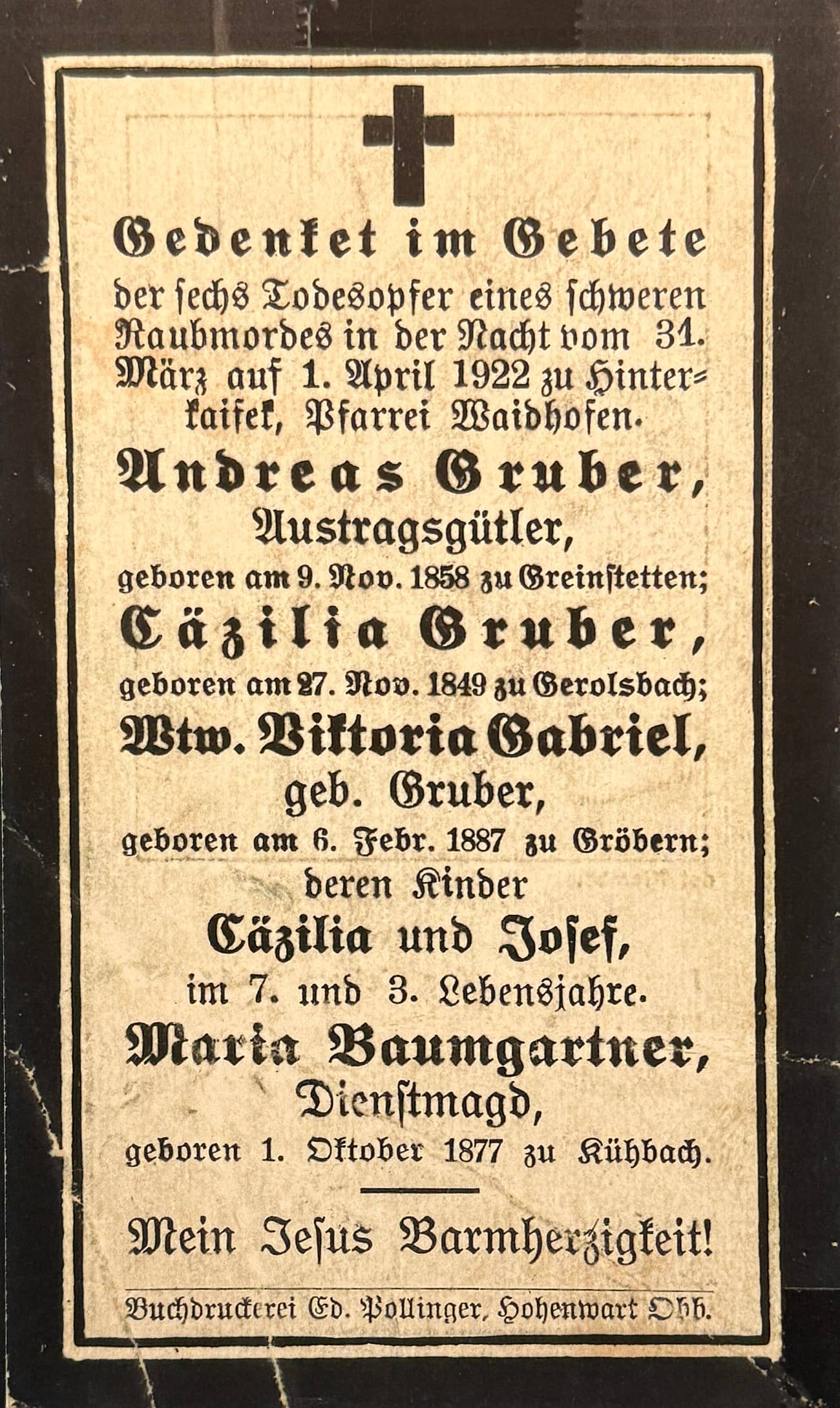
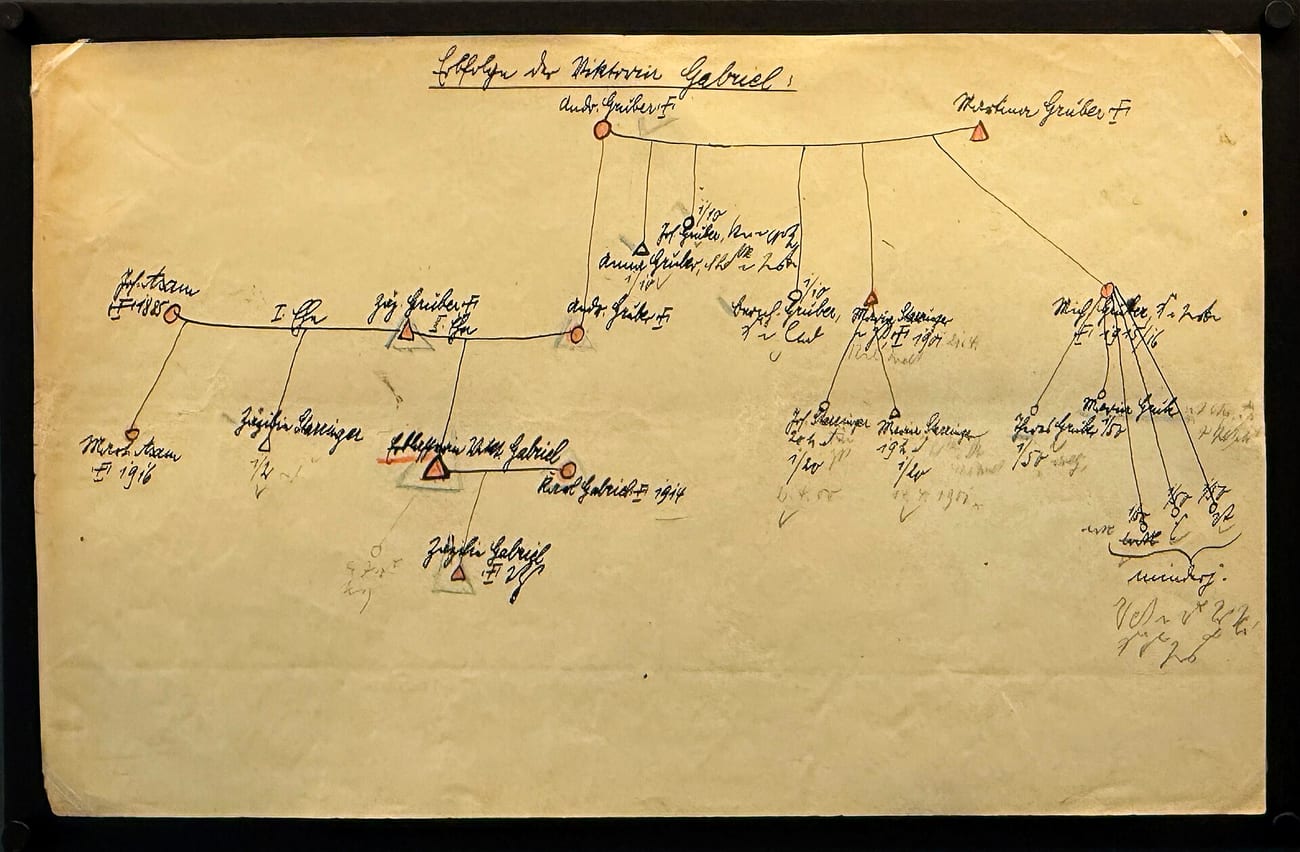
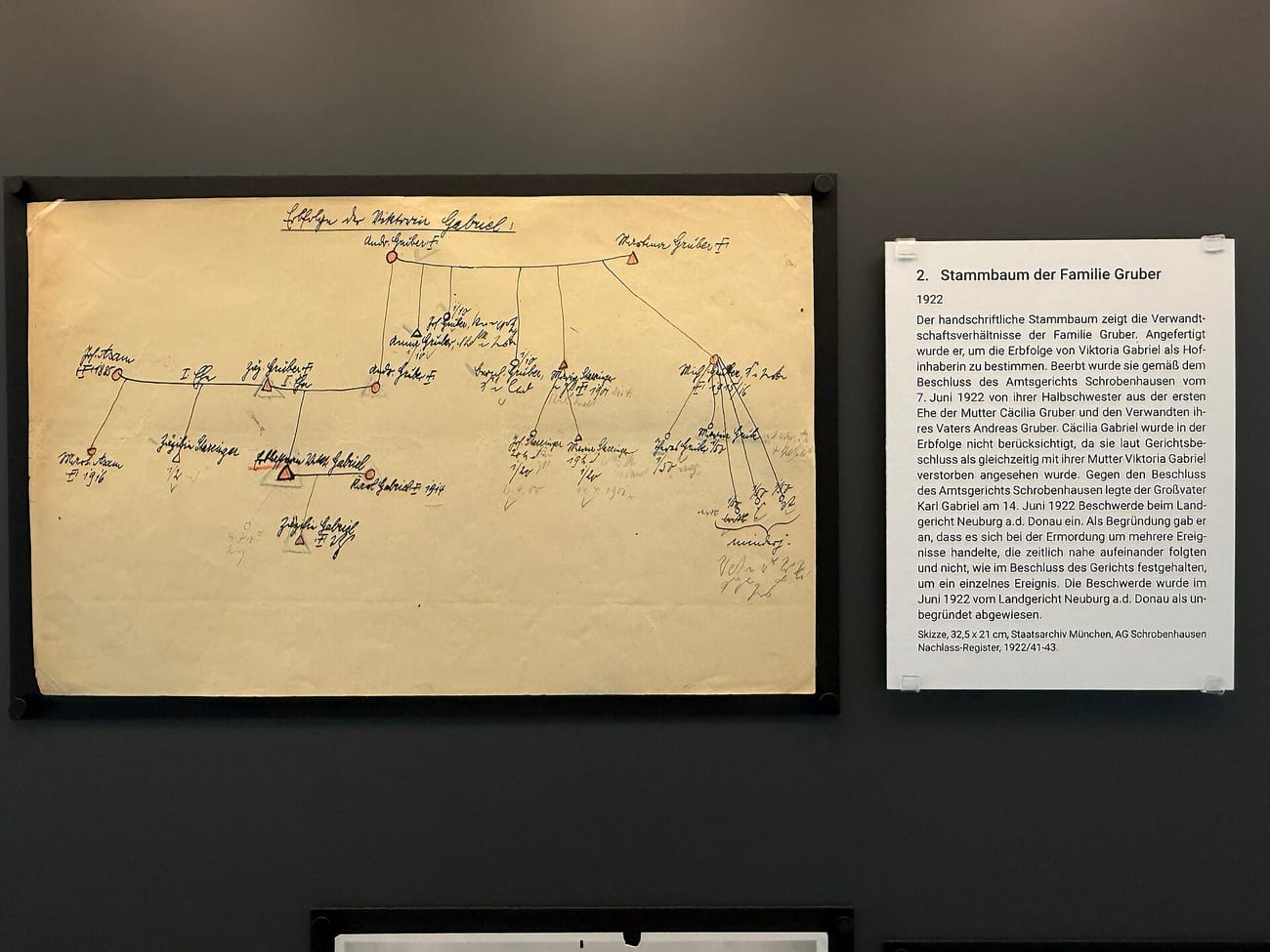
The people who lived there were an ordinary farming household. Andreas Gruber, 63, ran the property with his wife, Cäzilia, 72. Their widowed daughter, Viktoria Gabriel, 35, lived with them along with her two young children: seven-year-old Cäzilia and two-year-old Josef. It was a hard, closed-off life, and by most accounts not a happy one, but it was unremarkable — the sort of household that neighbors expected to see at church on Sunday and at market during the week.
The family was also, quietly, the subject of local talk. Viktoria was a widow; her first husband had died in the war. There were long-standing rumors about the closeness of the household and about the parentage of little Josef, and those rumors would later feed the darker theories about motive. None of it was proven, and much of it was the ordinary cruelty of village gossip. But it matters for one reason: it meant the Grubers were a family with private tensions and hidden business, the kind of household where a personal grudge could take root unseen. That ordinariness on the surface, with something unsettled underneath, is exactly what makes what happened next so hard to explain.
The things that came before
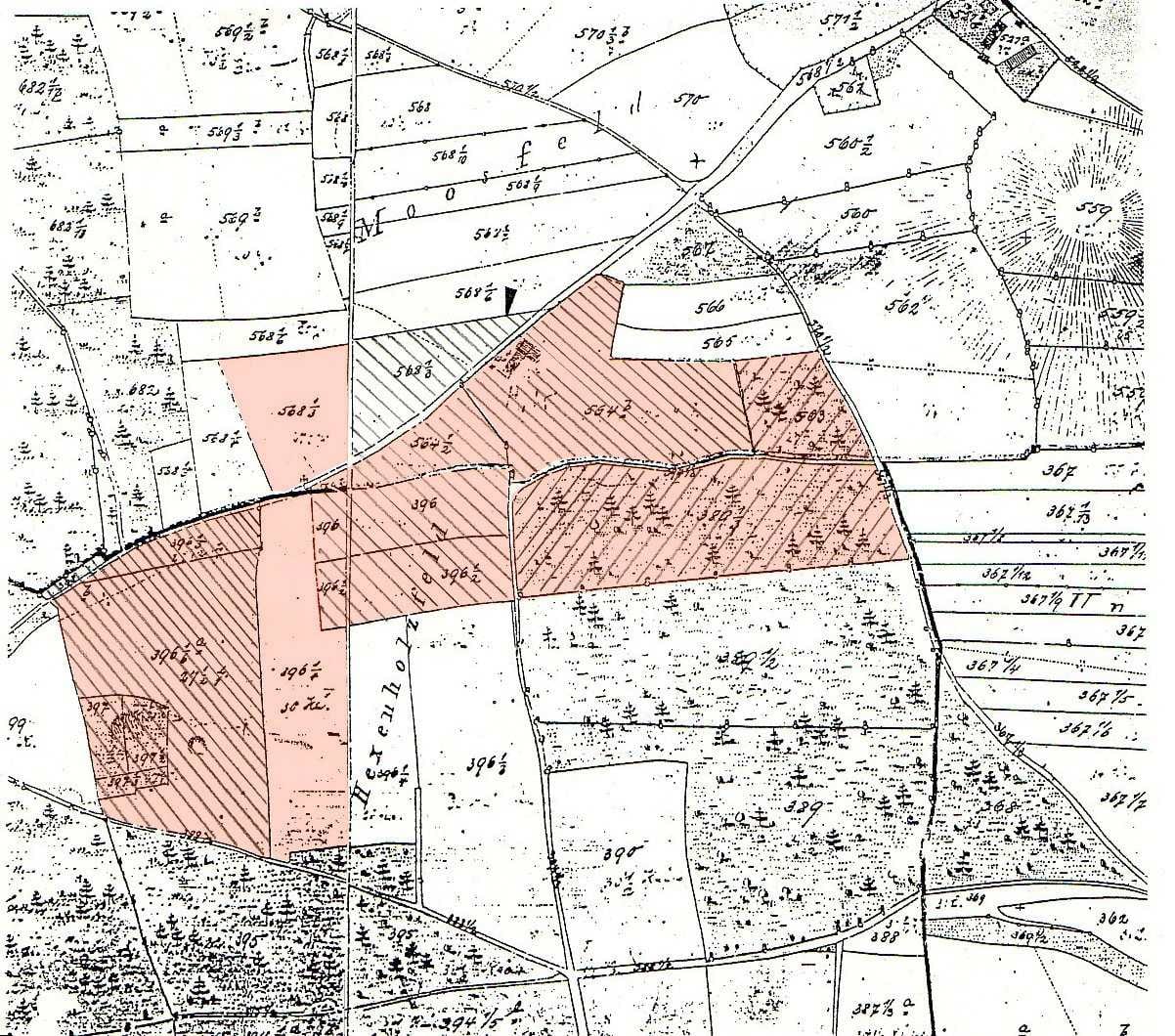
For months before the murders, the farm had felt wrong to the people living in it.
Andreas Gruber told neighbors that he heard footsteps in the attic. Not once, but repeatedly, over a period of weeks — the sound of someone moving above the family in a space that was supposed to be empty. He searched and found no one. He found no explanation. He simply kept hearing it.
Around the same time, small physical things stopped adding up. The house key went missing and was never found. A set of keys to the farm disappeared without a trace. Andreas discovered a newspaper on the property that no one in the household had bought or brought home — a paper that, by later accounts, no one in the immediate area even subscribed to. Someone, it seemed, had been coming and going.
Then there were the footprints. In the fresh snow, Andreas found tracks leading out of the forest toward the house — and, according to what he described, no tracks leading back. Whoever had made them had walked from the tree line to the farm and, apparently, had not left again. He also noticed marks and disturbance around a door with a broken lock leading into the farm's machine room.
There is one more detail that colors everything. The family's previous maid had quit roughly six months earlier. The reason she gave, widely repeated afterward, was that she believed the house was haunted — that she had heard noises she could not explain and would not stay. She walked away from a paying job on an isolated farm rather than spend another night there.
Andreas Gruber reported some of these things to neighbors. He did not, as far as the record shows, go to the police. Whatever was happening, the family stayed.
The new maid
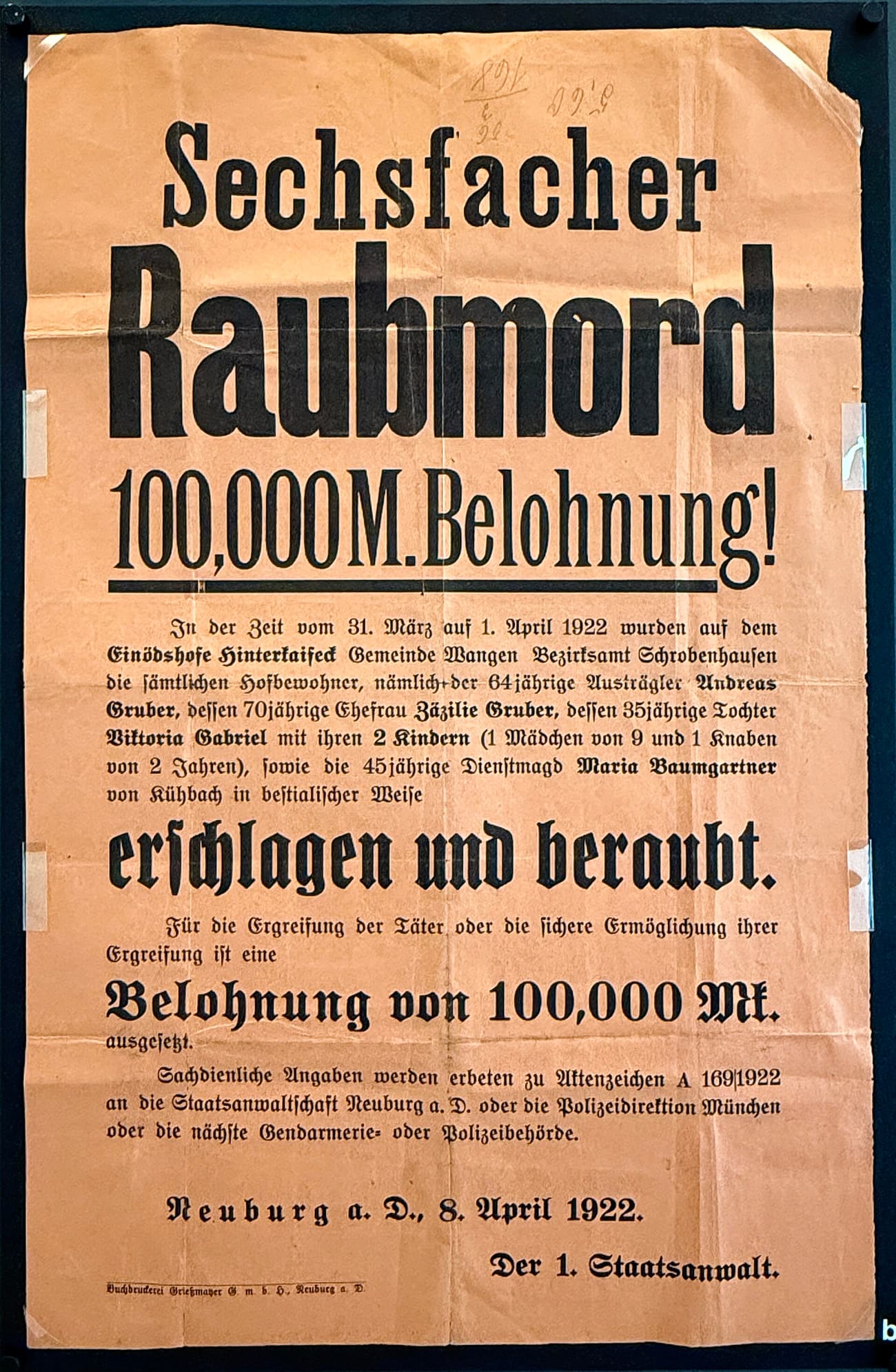
A new maid was needed, and one finally arrived: Maria Baumgartner, 44. She reached Hinterkaifeck on 31 March 1922, brought to the farm to begin her service.
She had been there only a matter of hours.
By the end of that same day she was dead — the sixth and last of the victims, a woman who had walked into the house that morning as a stranger and never had the chance to know the people she came to work for.
The night of 31 March 1922
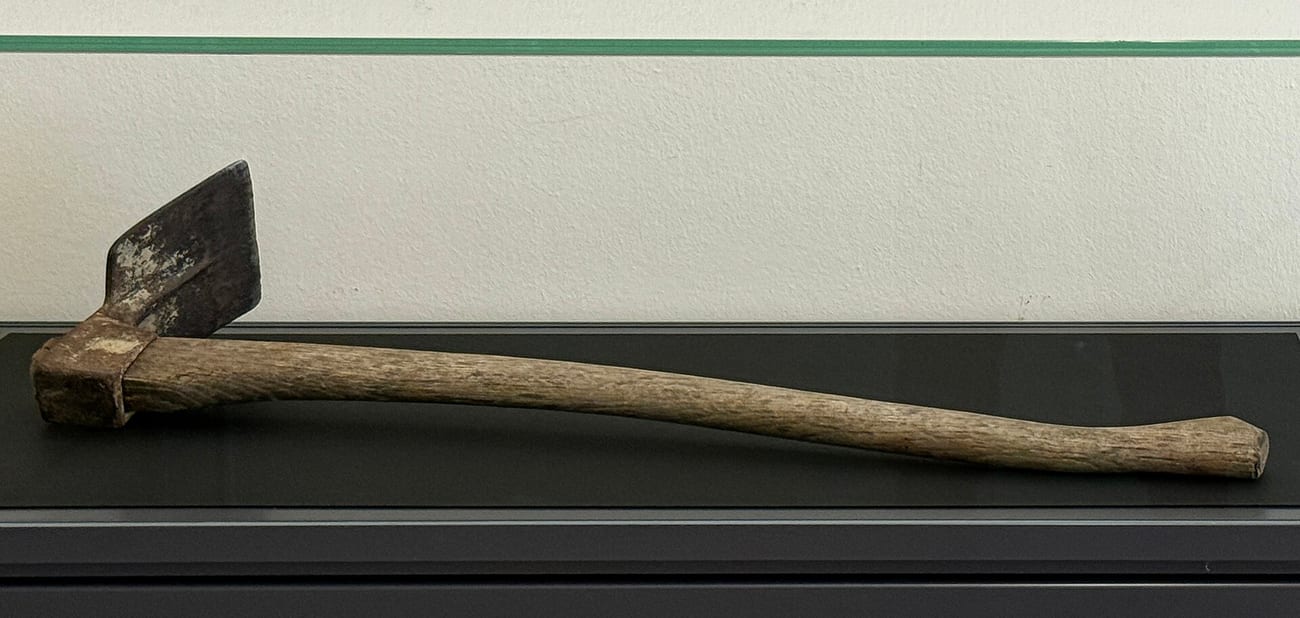
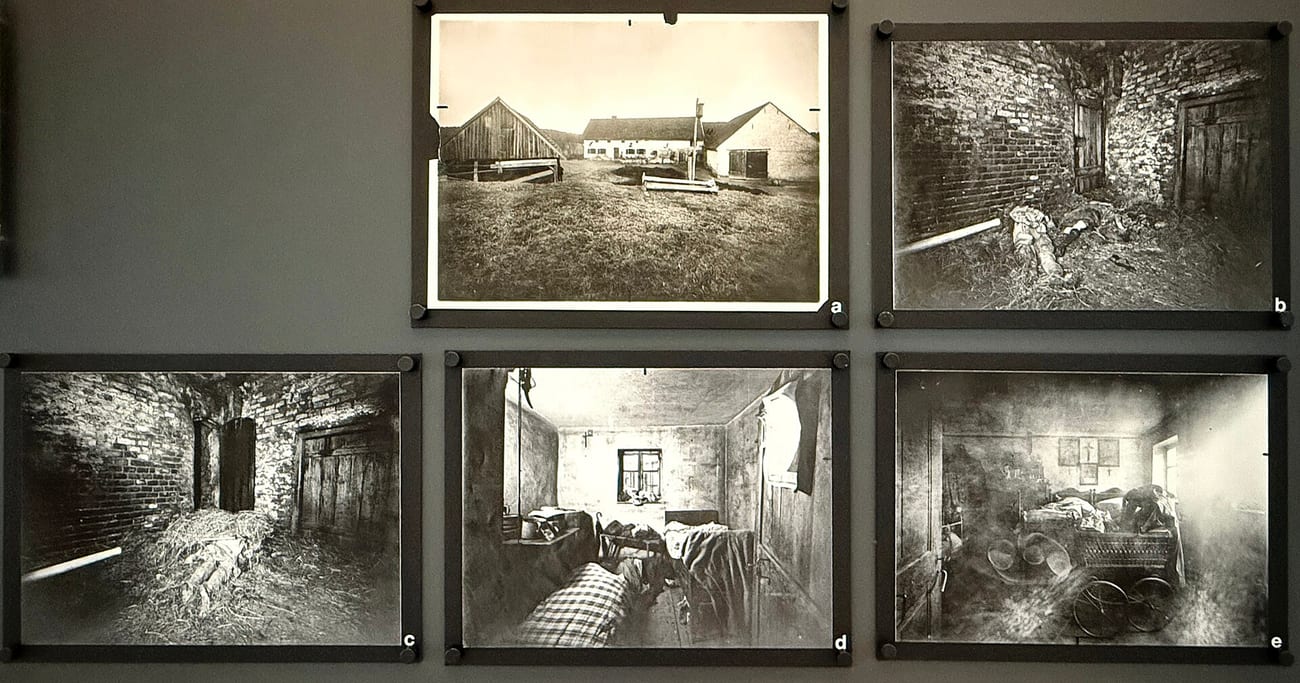
What investigators later pieced together suggests a killing that was methodical rather than frenzied. On the evening of 31 March, the members of the family appear to have been drawn out to the barn, one at a time, and killed there with a mattock — a heavy, pointed farm tool used for breaking ground. Andreas, his wife Cäzilia, and their daughter Viktoria were among the victims; so were the two children and the maid.
Four of the bodies were found together in the barn. The maid was found in her room. Six people, in a single night, on a farm where — hours or days earlier — footsteps had echoed in an empty attic and footprints had led out of the woods.
Among the hardest details to sit with, and one worth stating plainly and only once: the seven-year-old, Cäzilia, is believed to have survived for some hours after the attack. Investigators concluded this from a small, terrible sign — strands of her own hair found torn out — which told them how long she had lingered before she died. It is mentioned here not for shock, but because it is part of the record of how long that night lasted for a child. We will leave it there.

The days after
This is the part of the Hinterkaifeck case that has never stopped disturbing people.
The killer did not flee. For roughly the next four days, someone stayed on the farm.
Neighbors passing at a distance noticed smoke rising from the chimney. The livestock were fed and cared for. In the kitchen, later, there were signs that meals had been eaten. Whoever had killed the family went on living in the house alongside the bodies — cooking, warming the rooms, tending the animals as if nothing had happened. The postman delivered mail. A machinery mechanic came to the property. Life around Hinterkaifeck continued, and the presence inside gave no outward sign of alarm.
It was only when the routine breaks in a rural community began to add up — the seven-year-old missing from school, the family absent from Sunday worship — that concern grew. On 4 April 1922, several neighbors, including a farmer named Lorenz Schlittenbauer, went to the farm to check on the Grubers. It was then that the bodies were finally found, four days after the killings.
Whoever had been keeping the fires lit was gone.
An investigation that could not close
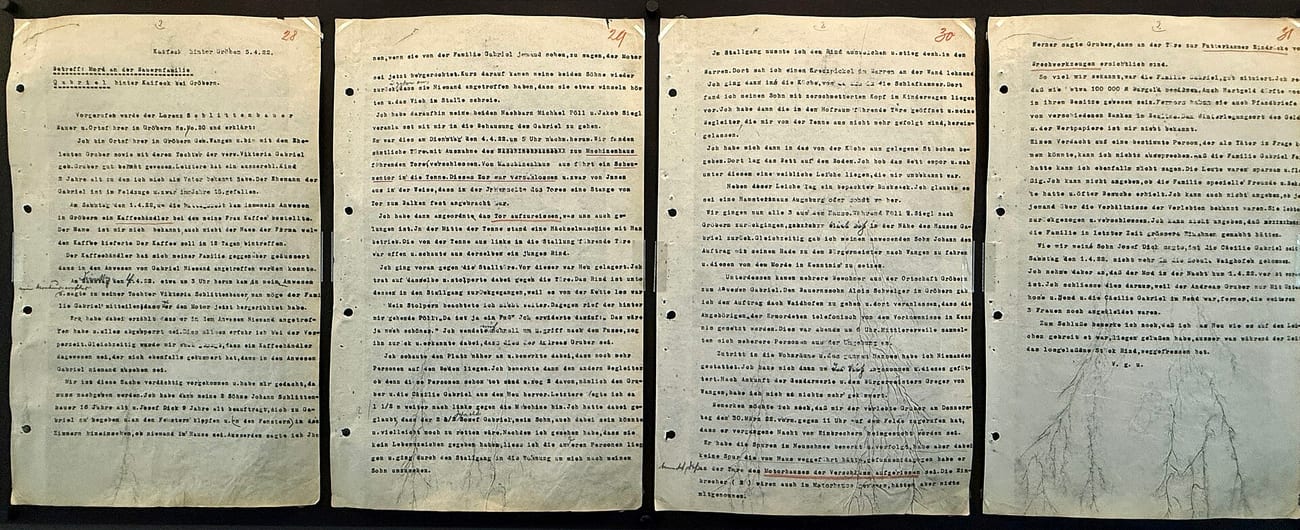
The case broke almost as soon as it opened. Hundreds of people passed through the farm in the days after the discovery — investigators, curious locals, journalists. The scene was not preserved by the standards even of that era. Notably, later reviewers pointed out that fingerprints were not properly collected, though the technique existed and was in use at the time.
The forensic aftermath is its own small tragedy. The victims' skulls were removed and sent to Munich for examination — reportedly including consultation with clairvoyants, a sign of how baffled the authorities were. The skulls never came back. They disappeared, most likely lost in the upheaval of the Second World War, and the family was ultimately buried without them.
In 1923, less than a year after the murders, the farm itself was demolished. The buildings that had held so many unanswered questions were torn down and cleared away. According to accounts of the demolition, a mattock — the presumed murder weapon — was found in the loft of the barn during the teardown.
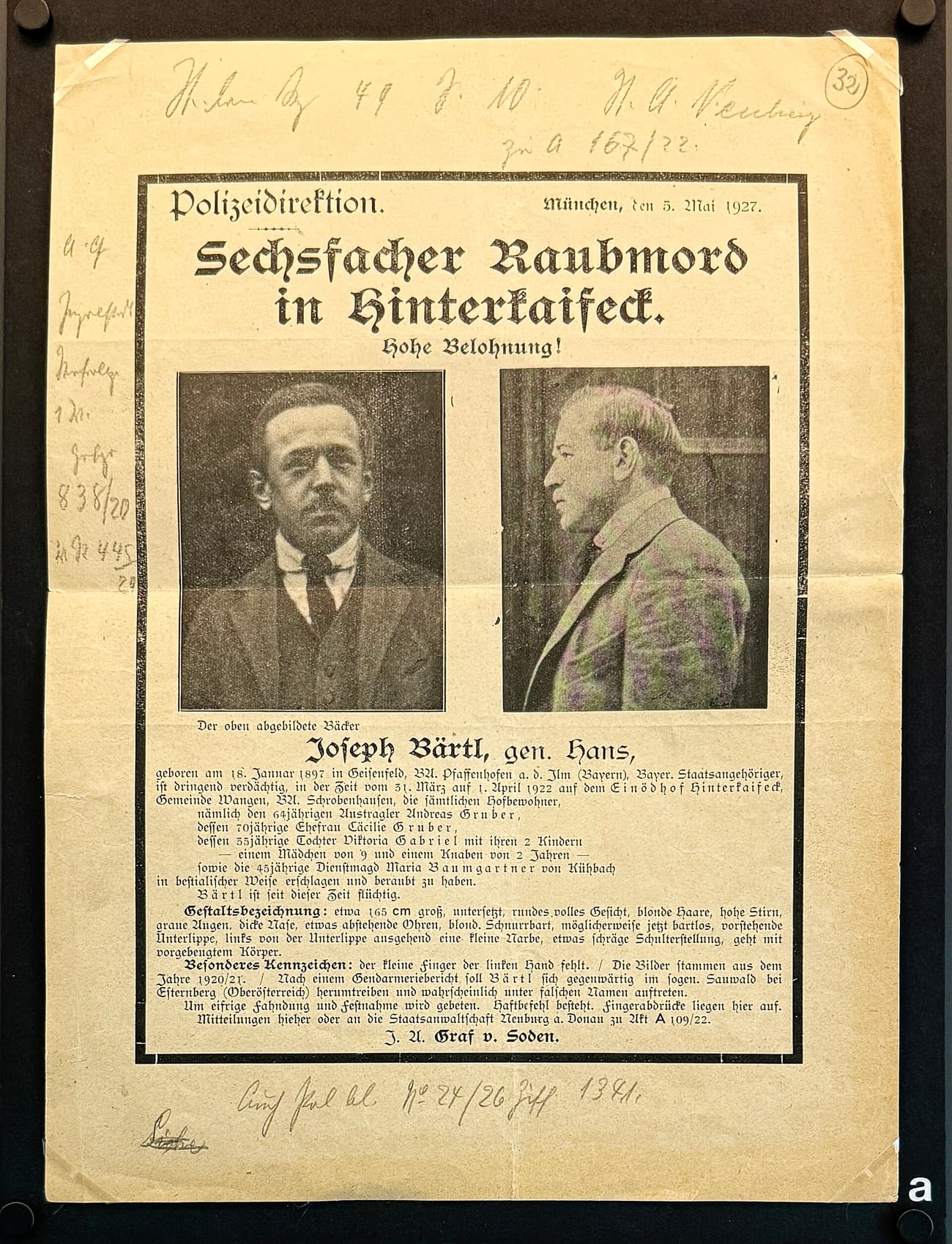
Decades later, in 2007, students at a German police academy took the case up again as a modern re-analysis exercise, applying contemporary investigative methods to the surviving files. They are reported to have reached a conclusion about a most likely suspect. But they chose not to release the name — everyone connected to the case, suspect and witnesses alike, was long dead, and there was nothing to be gained and a family's memory to protect. The conclusion exists. The public does not have it.
The theories
Over a hundred years, the explanations have piled up. Each one answers some of the facts and stumbles on others — and it is worth walking through them with their rebuttals, because that push and pull is the case.
Robbery gone wrong. The earliest and most obvious idea. It collapses almost immediately: money was later found in the house, undisturbed. A thief who broke in, killed a whole family, then lingered for days feeding the cattle and cooking meals while leaving the cash untouched is not a thief in any recognizable sense. Robbery does not explain the calm four days that followed, and the untouched money argues hard against it.
A personal grudge or family secret. This theory fits the human texture of the case better. The Gruber household carried private tension and local rumor, and a killer motivated by hatred or entanglement rather than money would explain both the thoroughness of the killing and the intimate knowledge of the farm — someone who knew the layout, the routines, and how to move through the buildings undetected. Its weakness is that it still doesn't account for the precursor months, the attic footsteps, and the missing keys unless you assume the same person was also stalking the family for weeks. Motive it can supply; the eerie logistics it cannot fully carry on its own.
The neighbor, Lorenz Schlittenbauer. The farmer who helped discover the bodies became, for many, the natural suspect. He had a personal connection to the family — he was widely said to be the father of little Josef — which supplied a possible motive. Witnesses noted that he moved the bodies in the barn and behaved with unusual composure, and that he seemed to know his way to the victims. Against this: his defenders point out that a man who believed his own child was inside would plausibly rush to move the bodies, that his knowledge of the farm was ordinary for a close neighbor, and that no physical evidence ever tied him to the crime. He sued people who accused him during his lifetime. The suspicion has never been proven or dispelled — it simply hangs there, which is its own kind of answer.
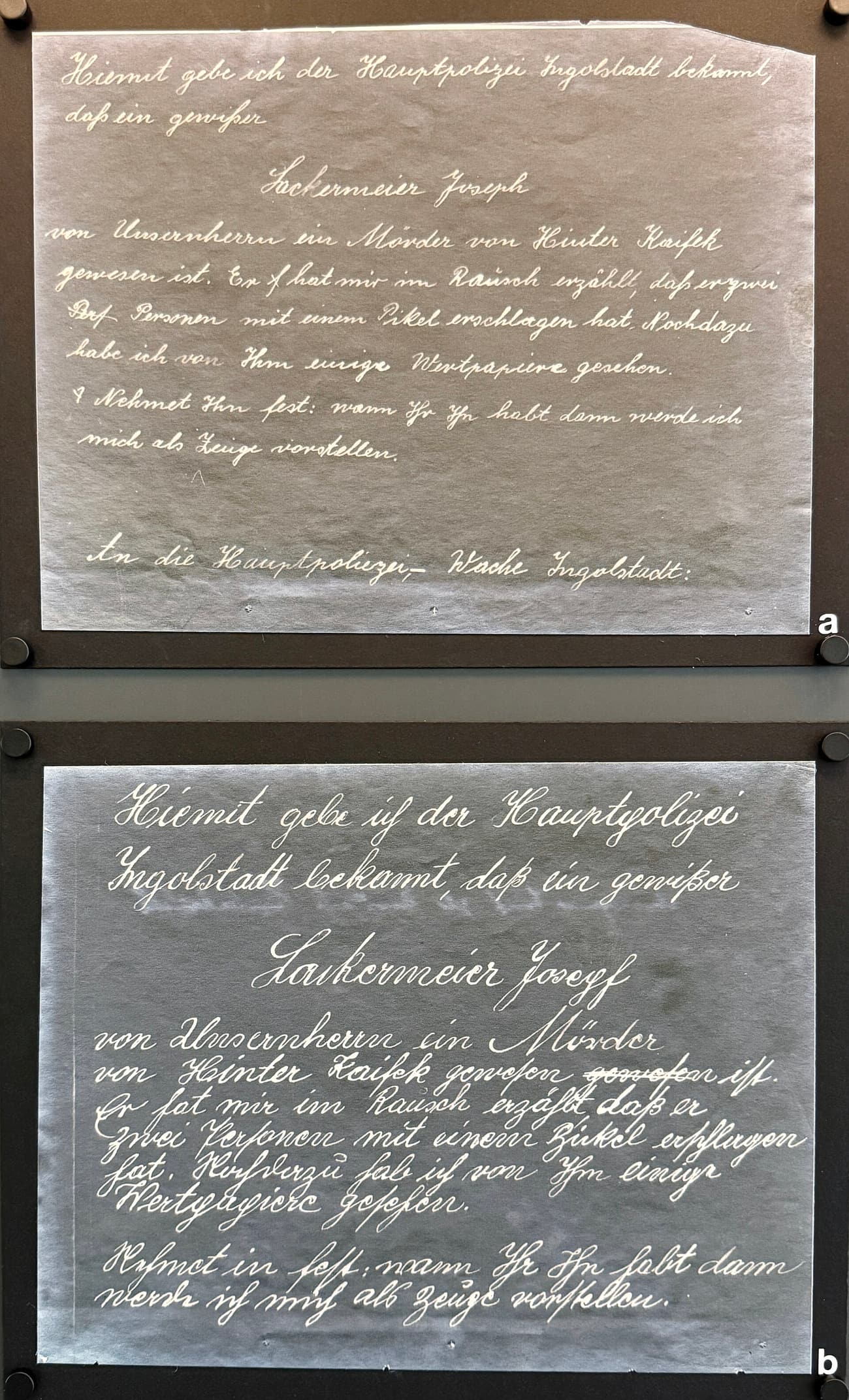
A stranger who had been there all along. The theory that best matches the eeriest evidence — the attic footsteps heard for weeks, the missing keys, the unfamiliar Munich newspaper no one had bought, the tracks leading out of the woods to the house with none leading away — is that someone had been secretly present on or around the farm before the night of the killings, possibly living in the attic or an outbuilding, watching. It is the most cinematic explanation, and unnervingly the one the precursor details seem almost designed to support. Its weakness is that it rests entirely on Andreas Gruber's own reports of those strange events, and on inference; there is no proof anyone ever hid in the attic, and frightened people in an isolated house can assemble ordinary noises into a story. But if even half of what Andreas described was real, someone was coming and going long before March.
Insanity or a wandering killer. A drifter or a mentally ill stranger passing through has been floated to explain the sheer strangeness — the pointless days spent on the farm afterward, the lack of clear motive. It struggles against the evidence of planning and familiarity: a random wanderer would not have known the family's habits or lured them individually to the barn.
That is the nature of Hinterkaifeck. The case does not resist a solution so much as it resists a clean one. Every theory that explains the calm aftermath struggles with the eerie beginning, and every theory that explains the beginning struggles to name a person.
What we know, and what we don't
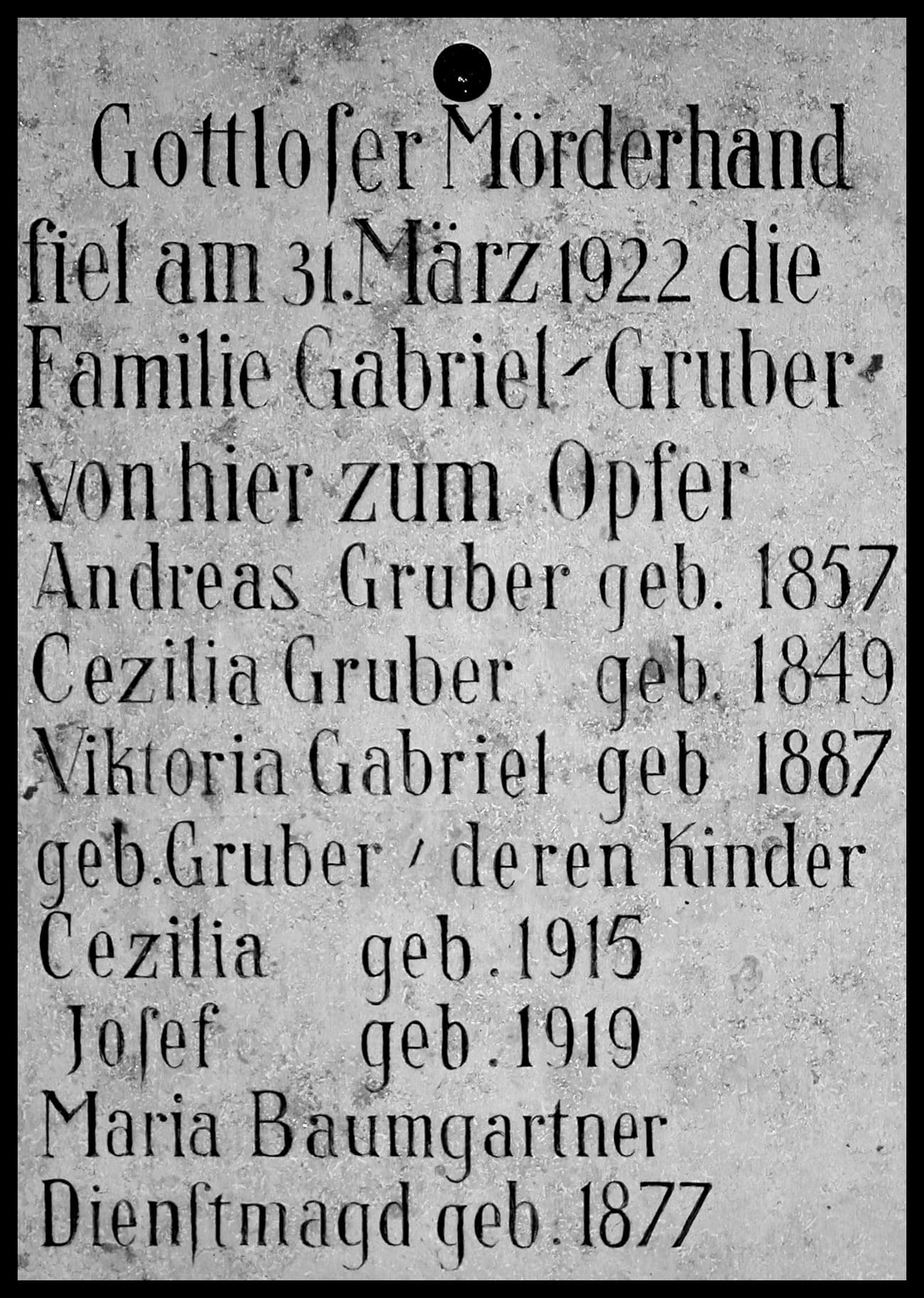
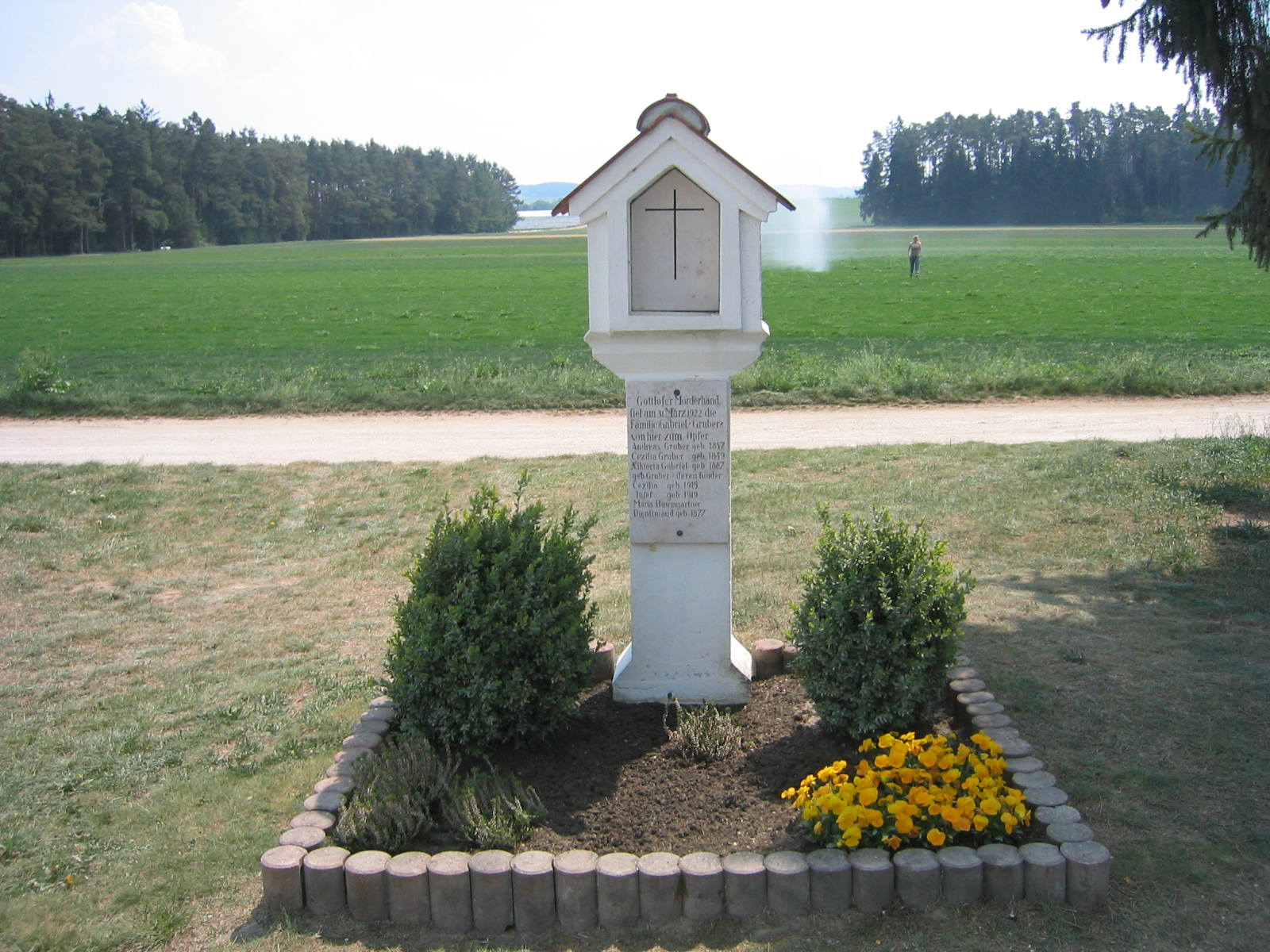
What we know: Six people were murdered at an isolated Bavarian farmstead on the night of 31 March 1922. The weapon was a mattock. For months beforehand, the household reported footsteps in an empty attic, a lost key that was never recovered, a newspaper no one had bought, and footprints in the snow leading to the house from the woods. A former maid had already left, saying the place was haunted. The new maid died within hours of arriving. After the killings, someone stayed on the farm for days, keeping it running, before the bodies were found on 4 April. The investigation was compromised early, the skulls were lost, the farm was demolished in 1923, and a 2007 re-analysis reached a private conclusion it never made public.
What we don't know: Who did it. Why they did it. Whether the strange months before were the killer's doing or a set of coincidences the mind stitches into a pattern after the fact. Whether the person who fed the cows and lit the fires was the same one who climbed out of the attic — or whether there ever was anyone in the attic at all.
Cross-referencing what survives of this investigation is an exercise in cataloguing absences. The skulls went to Munich and never came back. The farm came down in 1923. The scene was trampled before anyone thought to lift a print, though the technique existed. And in 2007 a group of police students reached a name and decided not to say it — a conclusion that exists, somewhere, in a form I will never be permitted to read. I have chased that last one further than I should have. It is the only piece of this file that is known and withheld rather than simply lost, and I find I mind that more.
A century on, Hinterkaifeck endures not because it is the bloodiest unsolved case, but because it is the most complete portrait of dread. The details before the murders read like a warning no one could interpret. The details after read like a haunting that outlasted the living. And in the middle is a single night on a farm at the edge of the woods, where the footprints led in and never led back out.
---
The images in this article are genuine archival and on-site photographs.




Comments
No comments yet — leave the first one.