
It was a little after eleven at night on January 8th, 2004, when a woman calling herself Hasumi opened a thread on Japan's largest message board and typed a sentence that would haunt the country's internet for the next two decades: her last train home hadn't stopped in twenty minutes, and something was wrong.
She wasn't writing a story. She wasn't warning anyone. She was, as far as the strangers reading along could tell, simply a tired commuter with a phone, narrating an ordinary ride that was quietly turning into something else. And because it unfolded post by post, reply by reply, in front of an audience that begged her to describe what she was seeing, the account of Kisaragi Station became one of the purest examples of a new kind of ghost story — one that doesn't get told to you so much as it happens around you while you watch.
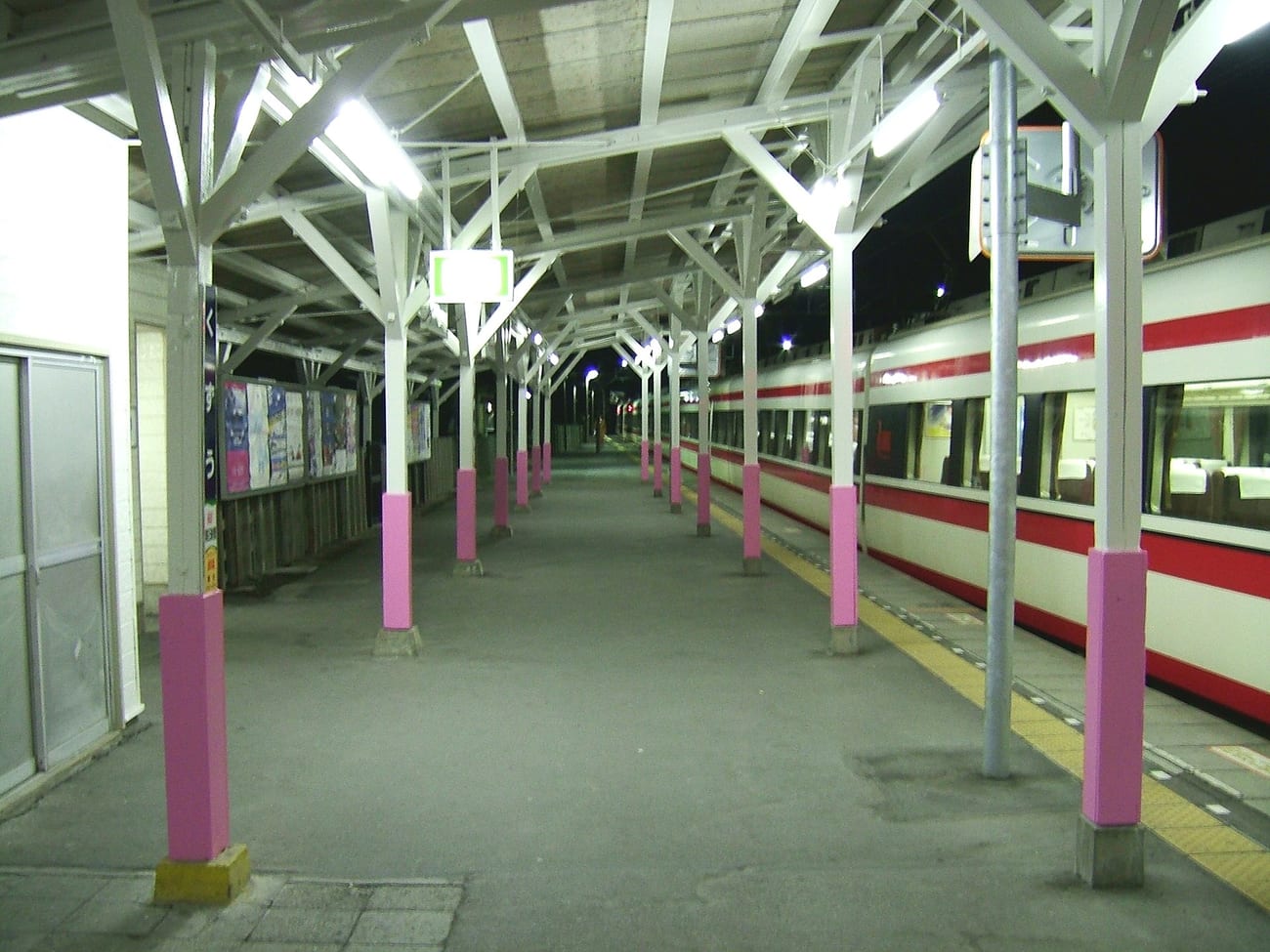
Archiving a thread is not like archiving a case. There is no report to request, no inquest to read against — only mirrors of mirrors, and every copy I have collected differs slightly from the last, a line dropped here, a timestamp adjusted there. I began this entry intending to reconstruct the canonical version and eventually accepted that no such thing exists. What survived that failure was a single fixed point I could not argue away: 3:44 in the morning. Whatever else has drifted between copies over twenty years, that hour has not, and I have never been able to read past it without stopping.
First, Some Context: What You're Actually Reading
To understand why this legend hit so hard in Japan — and why it never really loosened its grip — you have to understand the specific place it was born and the specific culture that raised it. Strip away that context and Kisaragi Station is just a short creepy story. Keep it, and you can see why an entire country treats a two-decade-old forum thread the way other cultures treat a genuine haunting.
2channel, the anonymous heart of the Japanese internet
The thread appeared on 2channel (usually shortened to "2ch"), an anonymous text-based message board founded on May 30th, 1999, by a man named Hiroyuki Nishimura, who started it while studying abroad in Arkansas. Calling it "a forum" badly undersells what it was. By the mid-2000s — exactly the moment Hasumi's thread appeared — 2channel was arguably the single most influential online space in the entire country. It drew somewhere around ten million monthly visitors and carried roughly 2.5 million posts a day, sprawling across thousands of separate topic boards covering everything from cooking to computer hardware to the occult. One journalist put its reach into perspective with a line that still gets quoted: this one website, he suggested, had more influence over Japanese public opinion than the prime minister, the emperor, and the traditional media combined.
Now the detail that matters most for our purposes. On 2channel, almost nobody posted under a real name. Anonymity wasn't a feature you could opt into — it was the entire architecture and the entire culture. You didn't build a reputation; you didn't carry a history from thread to thread; you were, functionally, a voice with no body attached. That single design choice is the engine of 2channel horror. When a nameless stranger types "the train still hasn't stopped," you have no profile to click, no post history to cross-check, no face to reassure or betray you. There is only the text, arriving one line at a time, and the deeply uncomfortable possibility that it is precisely what it claims to be. A named author you can dismiss. An anonymous voice in the dark, describing something to you as it happens, is much harder to wave away.
Japan's culture of collaborative internet folklore
Japanese internet culture didn't just tolerate this kind of story; it built an entire native genre out of it. Long before the English-speaking web borrowed the word "creepypasta" to describe scary tales that copy, spread, and mutate across the internet, 2channel users were already assembling elaborate, first-person supernatural accounts and posting them live. Some were openly written as fiction. Some were presented, straight-faced, as things that had genuinely happened to the poster. And the overwhelming majority sat in the deliberately blurred zone in between, where telling the two apart was impossible — which was, of course, the point.
What made these threads different from a story you'd read in a book was the audience's role. Readers didn't sit back and consume. They interrogated. They demanded updates, floated theories, pulled up maps, and issued instructions — pull the cord, get off at the next stop, call the police — and the poster answered in real time, bending the account around the crowd's reactions. The finished legend, if it can even be said to have an author, is folklore made by committee: a story that belongs simultaneously to everyone who touched it and to no one in particular. Kisaragi Station is the most famous product this machine ever produced.
So set your expectations correctly before we walk into it. Kisaragi Station is not a documented disappearance. There is no missing-persons case behind it, no newspaper report, no police file, no verified identity. It is a piece of collaborative online fiction that hardened, over the years, into modern folklore. The dread it generates is completely real — you will feel it — but the event, almost certainly, is not. The whole experience lives in the tension of holding both of those facts in your head at the same time: knowing it can't be true, and feeling, line by line, as though it might be.
The Night It Happened
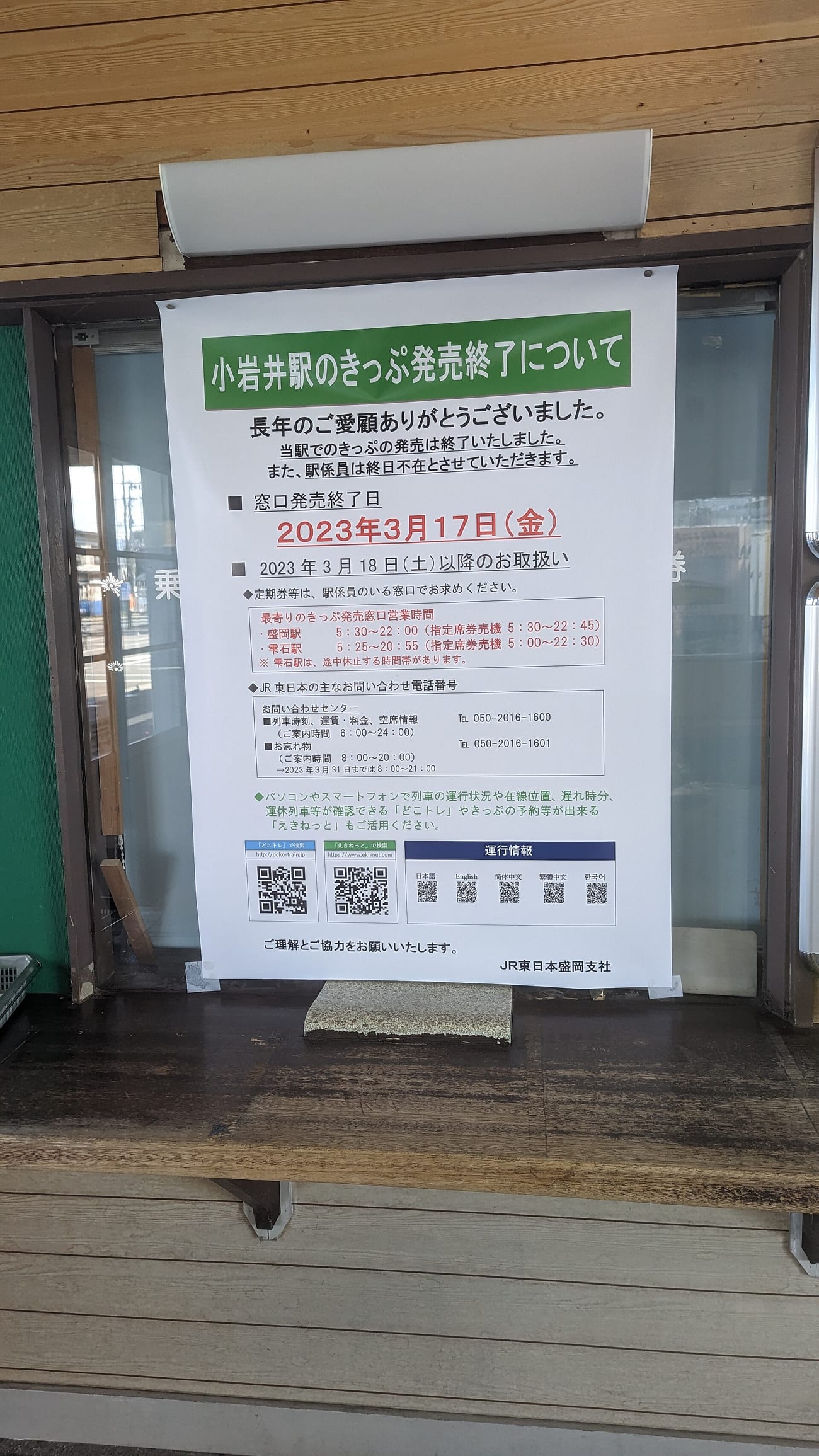
Here is the legend as it played out on the board.
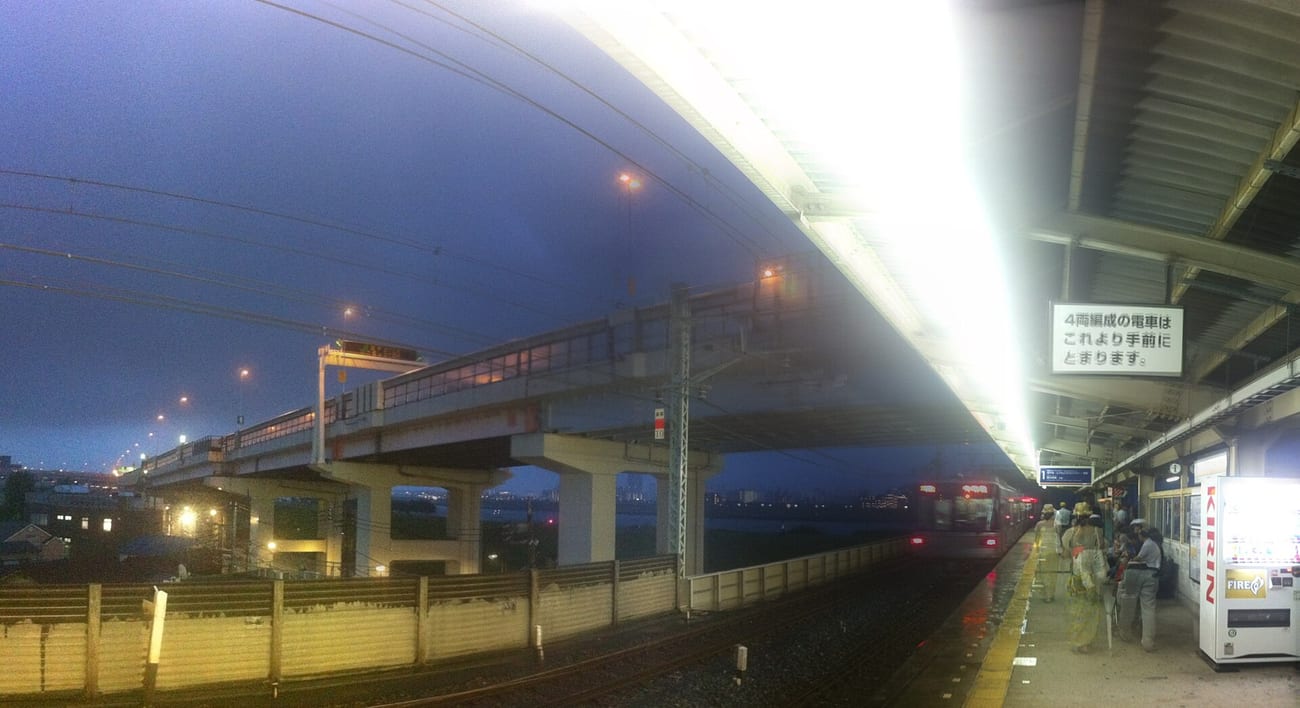
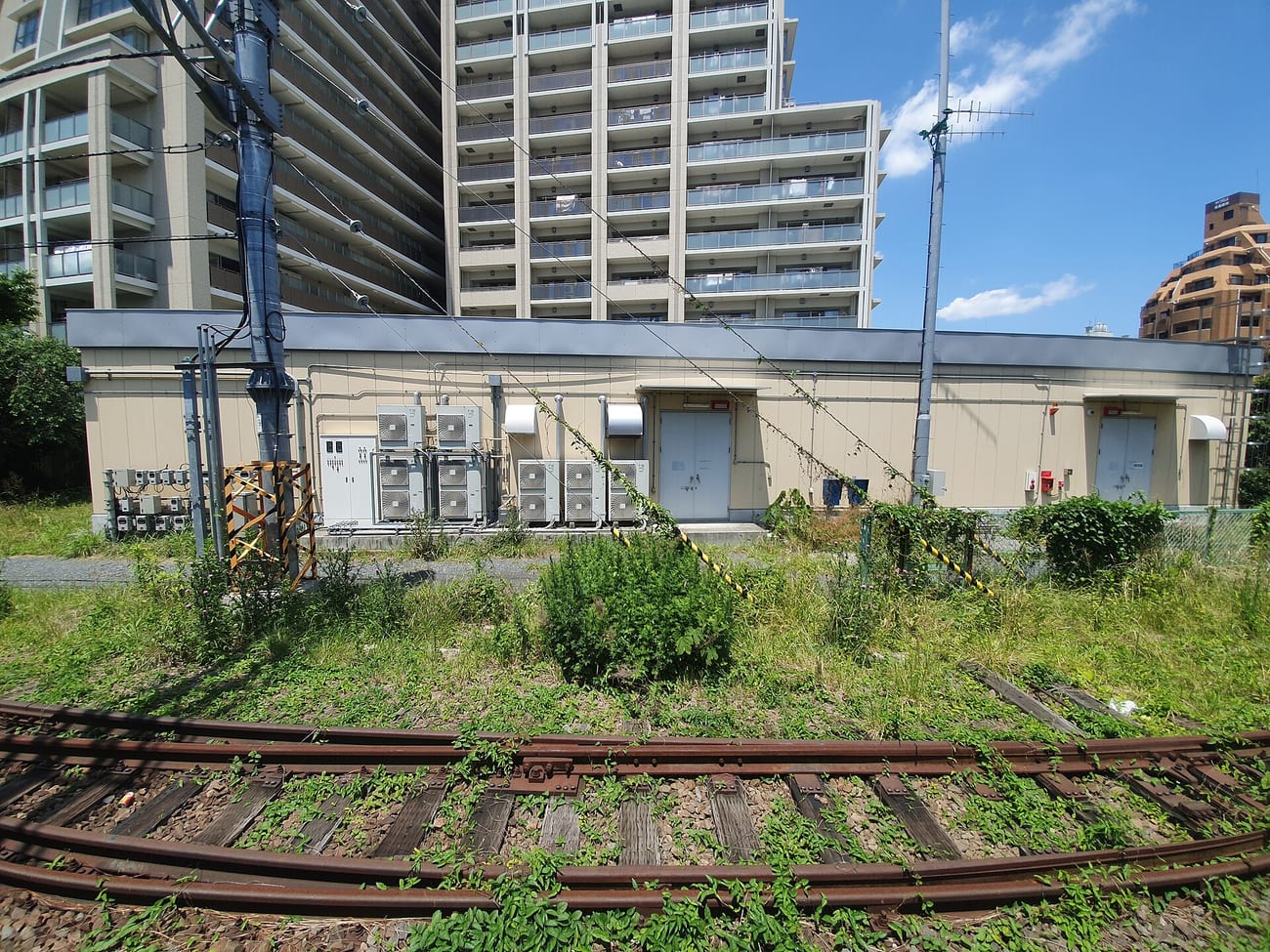
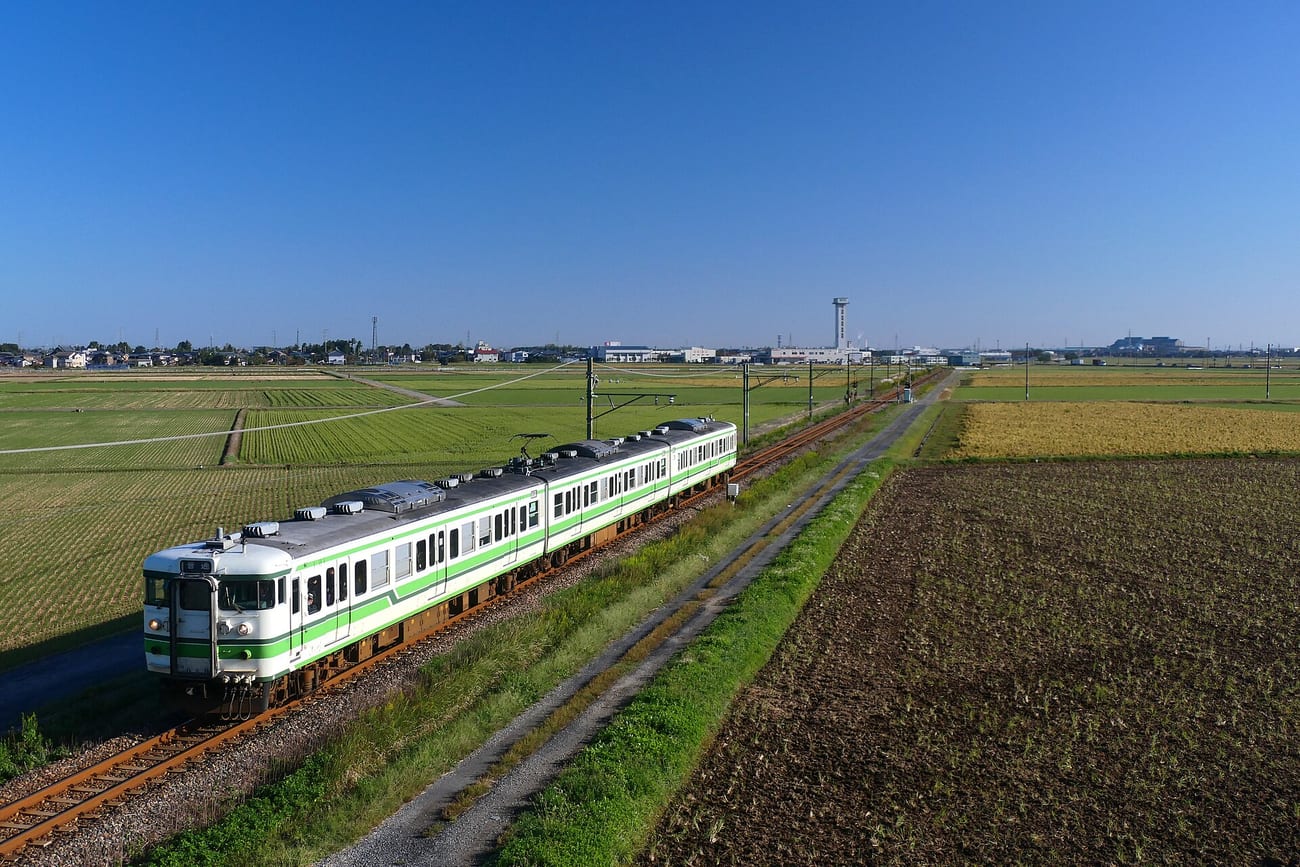
Hasumi was riding the last train of the night — the final departure, the one you cannot afford to miss — on a private railway line she took all the time, somewhere in the Shizuoka area near Shin-Hamamatsu Station. This was a route she knew cold: the sequence of stops, the timing between them, the ordinary rhythm of a commute repeated a hundred times. That familiarity is exactly why the wrongness registered when it did. Twenty minutes into the ride, she realized something that should have been impossible on a line she knew this well: the train had not stopped once. No stations had slid past the windows. No announcements had come over the speakers. There had been only motion, unbroken, for twenty minutes on a route where the stops come every few.
She looked around the car. Every other passenger was asleep. Not nodding off, not dozing the way tired commuters do — asleep, all of them, uniformly and completely, as though the entire carriage had been quietly switched off around her while she wasn't looking. Half-joking and half-uneasy, she posted about it, and the thread began to fill with replies. Strangers told her to pull the emergency cord. To read the next sign the moment one appeared. To get off at the very next stop, whatever and wherever it turned out to be.
Eventually, the train slowed. It coasted to a stop at a platform, and Hasumi read the name off the sign and typed it into her post: Kisaragi Station.
Nobody recognized it. And this is the moment the legend snaps shut like a trap, because the readers didn't have to take her word for anything — they could check. They pulled up route maps. They searched timetables. They walked the line stop by stop in every reference they could find. And there was nothing. There was no Kisaragi Station. Not on that railway, not on the neighboring lines, not anywhere a search in 2004 could reach. The audience did the verifying, and the verification came back empty, which is far more frightening than any assurance the poster herself could have offered.
Hasumi stepped off the train onto the platform. Around her there was nothing but dark hills and grass stretching out into the night. No station attendant in a booth. No vending machines humming. No lights of a town on the horizon, no road, no other trains waiting on the far track. The last train of the night had carried her to a stop that did not exist, opened its doors, let her out — and then it was gone, and she was standing alone in a place that no map would admit was real.

The phone calls that went nowhere
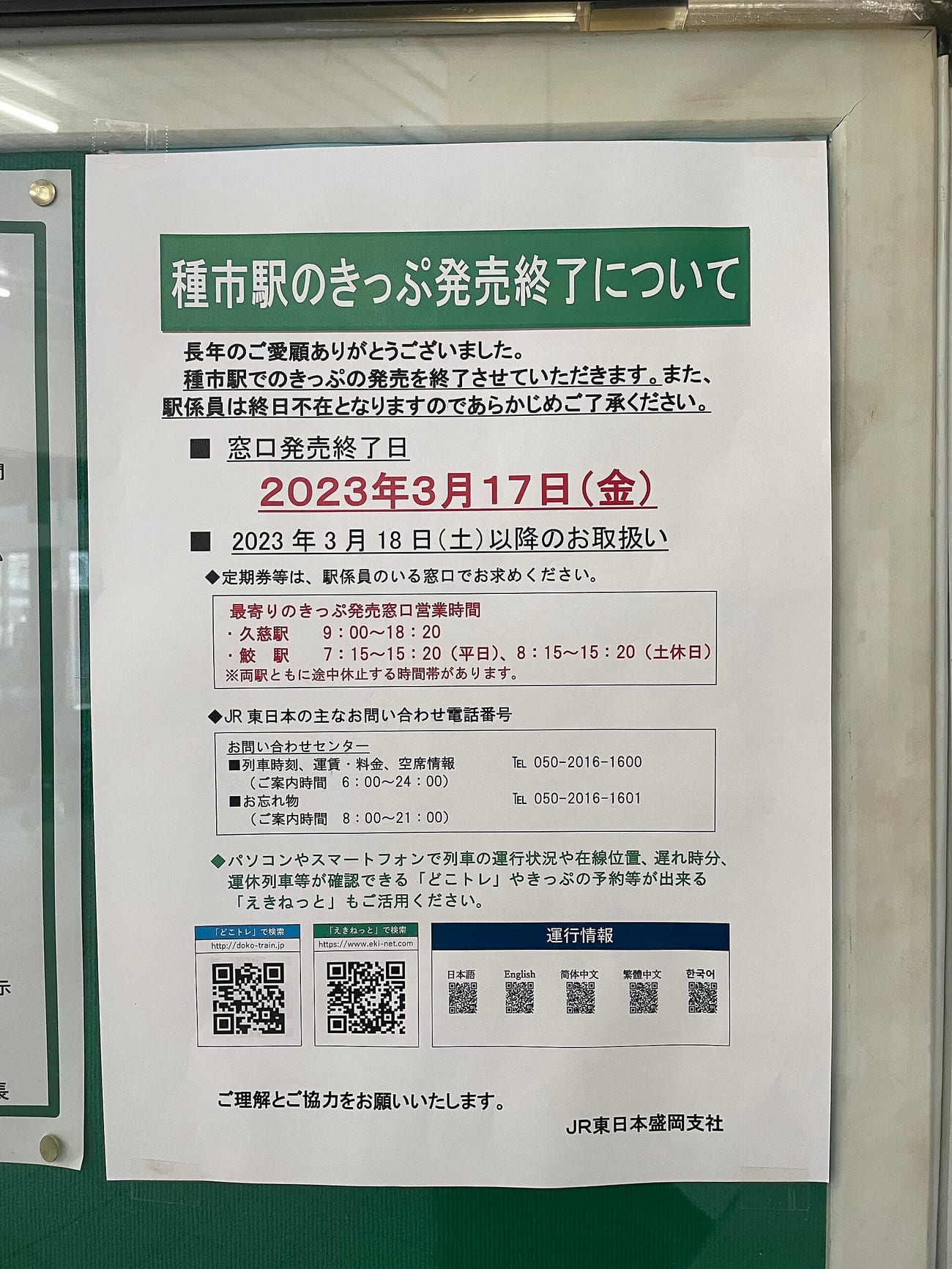
She did the sensible things first, the things any of us would do. She called the police. The response, as she relayed it, was flat and dismissive: they treated her like a prank caller — a bored kid phoning in a fake emergency about a fake station — and got off the line. She tried to call a taxi. The dispatcher told her plainly that there was no such station anywhere in their service area, and refused to send a car to a place that didn't exist. This is one of the quietest and most effective turns in the whole legend. Every rational lifeline she reached for — the police, a cab, the ordinary machinery of a society that is supposed to come get you when you're lost at night — simply declined to acknowledge that where she was standing could be real. She wasn't in danger from a monster yet. She was in danger because the world had stopped agreeing that she was anywhere at all.
So she started walking. With no train, no taxi, and no help, Hasumi set off on foot along the railway tracks, heading into the dark in the hope of reaching somewhere the map recognized. She kept typing as she went — still narrating, still describing what she saw, to the only people left who believed her: the anonymous strangers reading along, powerless, thousands of them, unable to do anything but watch.
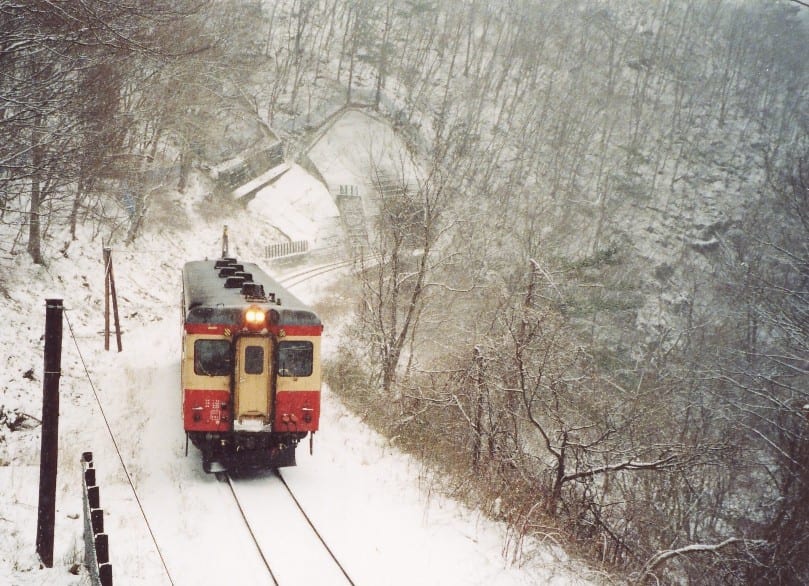
The long walk
The walk is where the story turns from strange to genuinely, physically wrong, and — this is the craft of it — it does so patiently, one small detail at a time, never all at once.
First came the sounds. Out in the dark, from somewhere she couldn't place and couldn't approach, she heard things that belonged to no train station: the low, deliberate thud of a drum, and threaded through it the thin ringing of a bell. Not machinery. Not traffic. Something closer to a ritual, playing out beyond the tree line for an occasion she wasn't invited to.
Then a figure. An old man appeared on the tracks ahead of her — and he had only one leg. He spoke to her directly, and what he said wasn't a threat but a warning: that walking along the railway tracks was dangerous, that she shouldn't be doing this. And then he was gone. Not walked away, not turned a corner — gone, in the abrupt, seamless way that people are only ever gone in dreams and in stories built like this one. A warning delivered and then withdrawn, leaving her more alone than before he arrived.
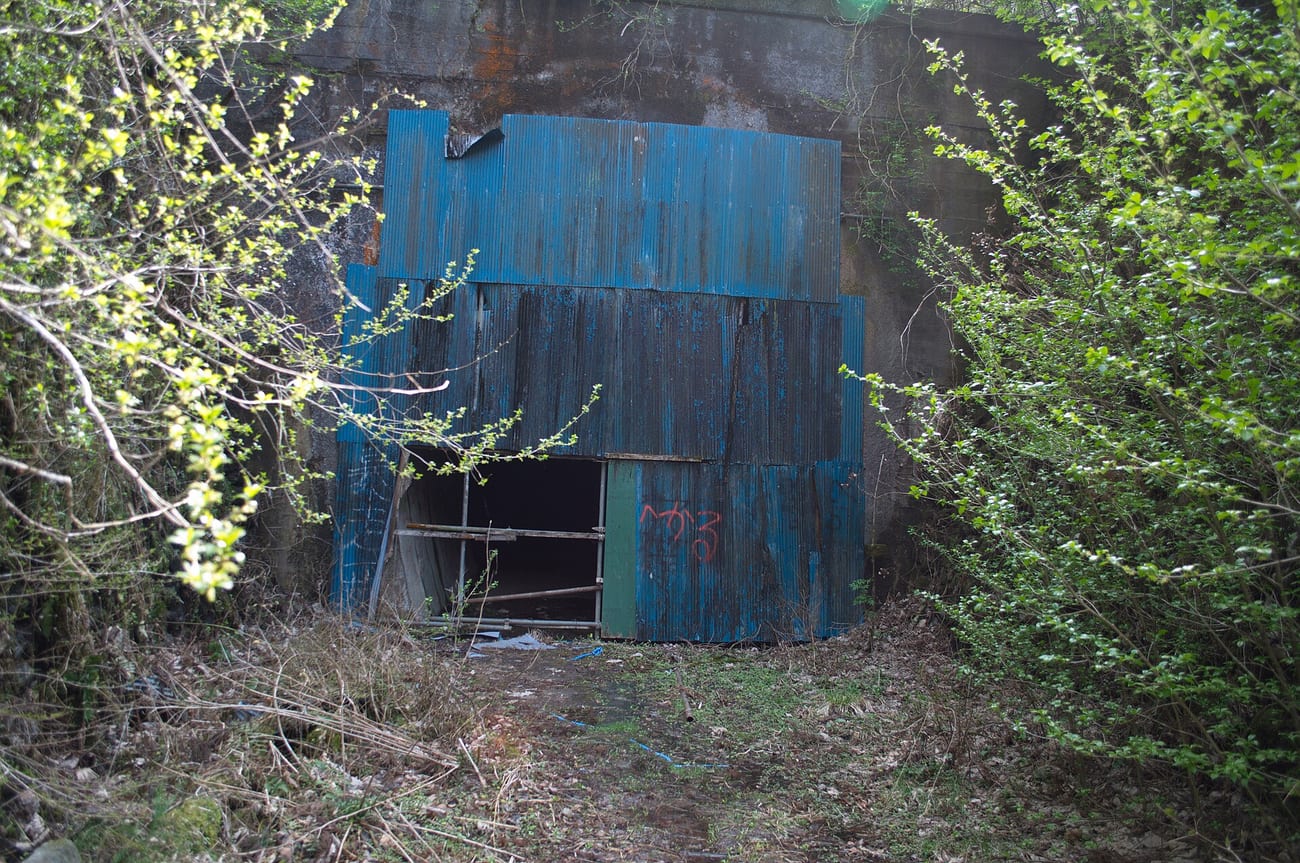
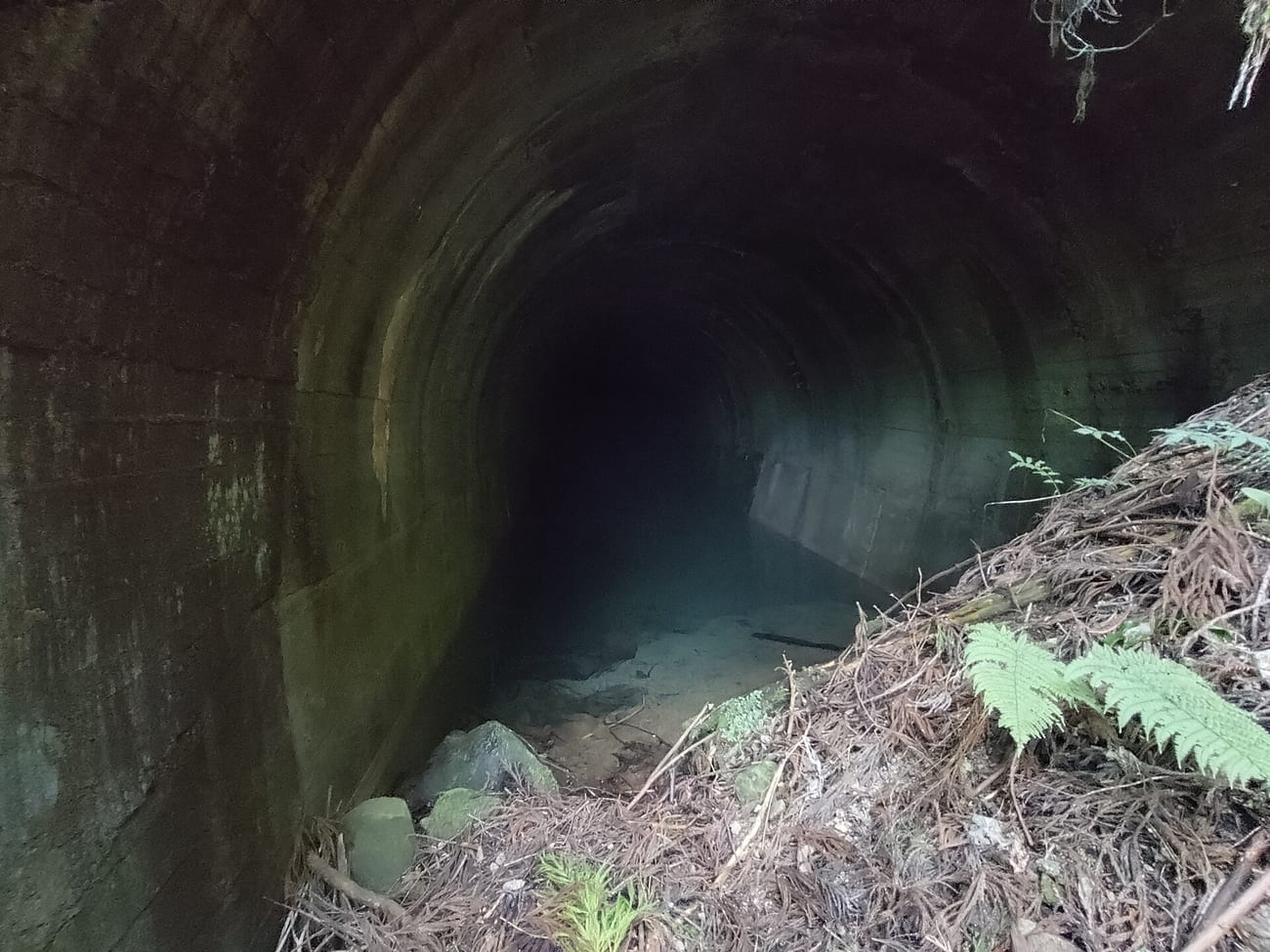
She kept moving and passed through a tunnel, which she named in her posts as the Isanuki tunnel — another proper noun that grounds the account in specificity, gives it the texture of a real place with a real name, and yet appears on no map you could pull up to check. The legend is full of these: names precise enough to sound documented, unreal enough to be unfindable.
And then, at last, a person who stayed. A man in a car pulled up alongside her and offered her a ride. After a night of doors closing — the police, the taxi, the vanishing old man — this was the first and only human being to actually offer help, and so, understandably, she took it. Anyone would have.
The car did not head toward town. It turned toward the mountains and drove deeper into the dark, away from anywhere she recognized, and as it went the man behind the wheel began to mutter. A low, continuous, uninterrupted stream of words she couldn't make out — not talking to her, not talking to anyone, just muttering, on and on, as the road climbed into the black. Hasumi's posts grew shorter now, and more frightened. The relief of being picked up had curdled into something much worse than being alone on the tracks. She was being carried somewhere specific, by someone who would not explain himself, and she no longer had any say in where.
Her final message came at around 3:44 in the morning. She wrote that she was going to wait for a gap — a moment when she could — and throw herself from the moving car. And then, before she did, she thanked the strangers who had stayed with her the whole night, reading, urging, believing her when no one with any power to help would.
Then the thread went silent. And that silence, after so many hours of a voice describing everything in real time, is the loudest thing in the entire legend.
The Return, Seven Years Later
That could have been the end — a self-contained tragedy with no body, no proof, and no resolution, which is exactly the kind of ending internet legends thrive on. But in 2011, seven years after the original thread, a new post appeared under the same name.
"This is Hasumi. I'm back."
The follow-up was brief and disoriented, and it landed on a single line that has since become the legend's signature note of horror — the detail people quote when they want to explain why it stays with them. She wrote that she no longer knew whether it was 2004 or 2011. Whatever she had walked into on that platform, time inside it had not run the way it runs out here. She had come back wrong, unsure of which year she was living in, as if the night had never actually ended.
Why This Story Endures
Kisaragi Station is not scary because of what it shows you. There is no monster, no violence, nothing you could screenshot and call gruesome. It endures because of how it was told, and that method is worth pulling apart, because it's the reason real-time internet horror works at all.
The first ingredient is the mundane opening. A late train. A tired woman. A route she takes constantly. There's no threshold you cross into "the scary part" — the horror seeps in through a situation so ordinary that you've lived it yourself, standing on a platform at night waiting for a train that's running late. When the wrongness arrives, it arrives inside the familiar, and that's far more effective than any haunted house.
The second is the collaborative, live format. Because readers were replying in real time, the story has the texture of something being discovered rather than performed. The audience checks the maps. The audience finds no Kisaragi Station. The audience tells her to call the police and then reads, helpless, as the police brush her off. You aren't a spectator to this legend; the original thread makes you one of the strangers who watched it happen and could do nothing.
The third is the refusal to resolve. We never learn where Kisaragi Station is, what the one-legged man was, what the muttering driver wanted, or what waited in the mountains. The 2011 return doesn't explain — it deepens. Horror that answers its own questions dies the moment the credits roll. Horror that leaves the door open follows you home. Kisaragi Station leaves every door open.

What This Actually Is
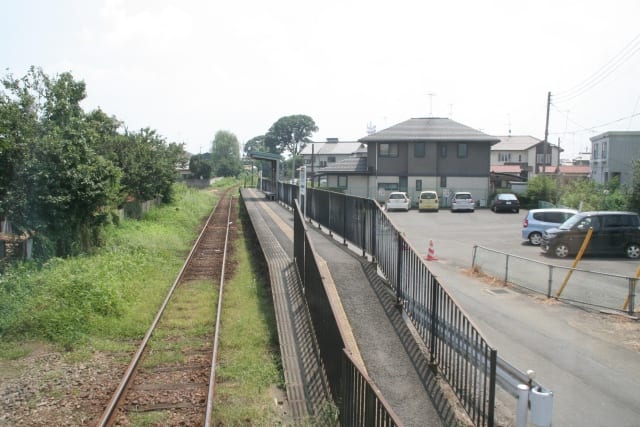
It's worth saying clearly, because a well-told legend can quietly convince you otherwise: Kisaragi Station is folklore. It is unverifiable by design. The names — Hasumi, Kisaragi, Isanuki — don't correspond to a documented person, a real station, or a police record. The account exists only as text on a message board, shaped in part by the very strangers who read it. In the years since, researchers and fans tried to pin it to real geography, most often pointing to the Enshū Railway line in Shizuoka and floating a real station near Hamamatsu as a possible inspiration, but the discrepancies never close, because there is no original event to close them against. This is fiction that became a myth, not a report that became a mystery.
That hasn't slowed it down in the slightest. Kisaragi Station grew into one of Japan's most recognizable internet legends, spawning a live-action film adaptation in 2022 and an unending stream of copycat posts from other users claiming, "I went to Kisaragi Station too." The film adaptation proved popular enough that the Enshū Railway leaned into the connection, temporarily renaming a real station and selling replica tickets that reportedly sold out within an hour — folklore looping back to touch the physical world it was never true in.
I file this one under fiction, and I am comfortable with that classification. What I am less comfortable with is the 2011 line, which I have transcribed enough times to have it by memory: she no longer knew whether it was 2004 or 2011. A hoaxer returning after seven years wants applause; the natural move is proof, a photograph, a name. Instead the post gives up the one thing a returning author cannot afford to lose, which is knowing when it is. I have gone back to that post looking for the seam and have not found it. It is the only part of the archive that reads as though it was written by someone who did not want to be believed.
And that, in the end, is the strangest afterlife a ghost story can have. A woman who never existed boarded a train that ran on time to a station that was always there, and typed a lie so patient and so quiet that twenty years later people still buy a ticket, stand on a real platform at night, and let themselves wonder — just for a second, just while the train is late — whether the next stop might not be on the map.
---
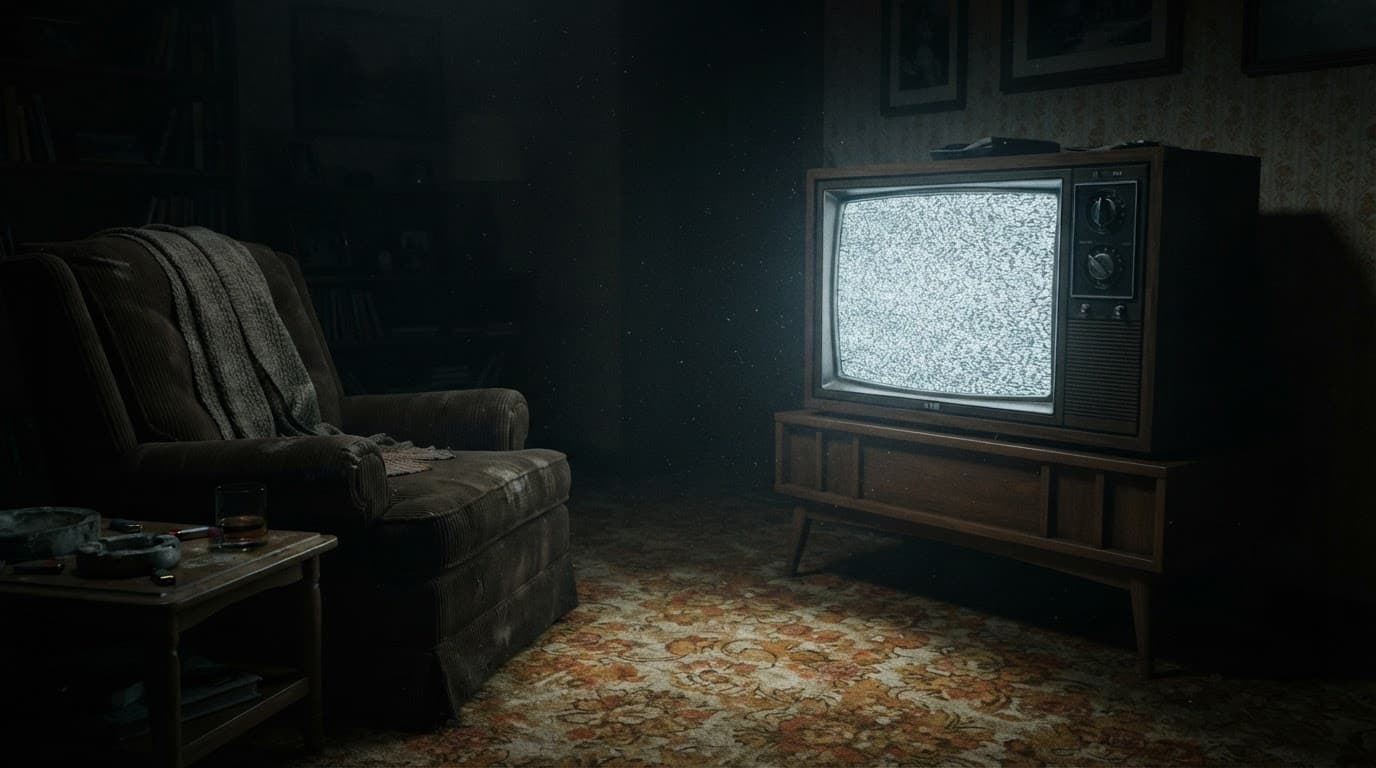
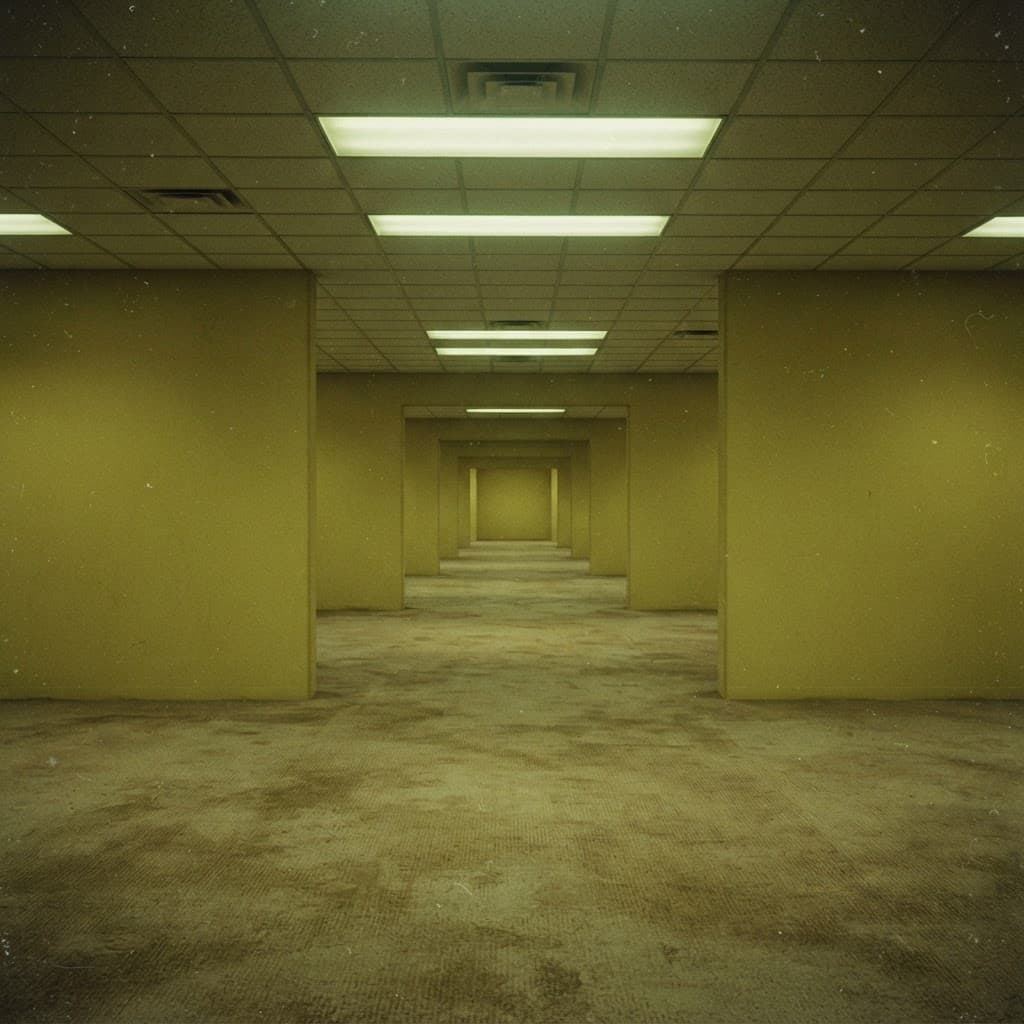
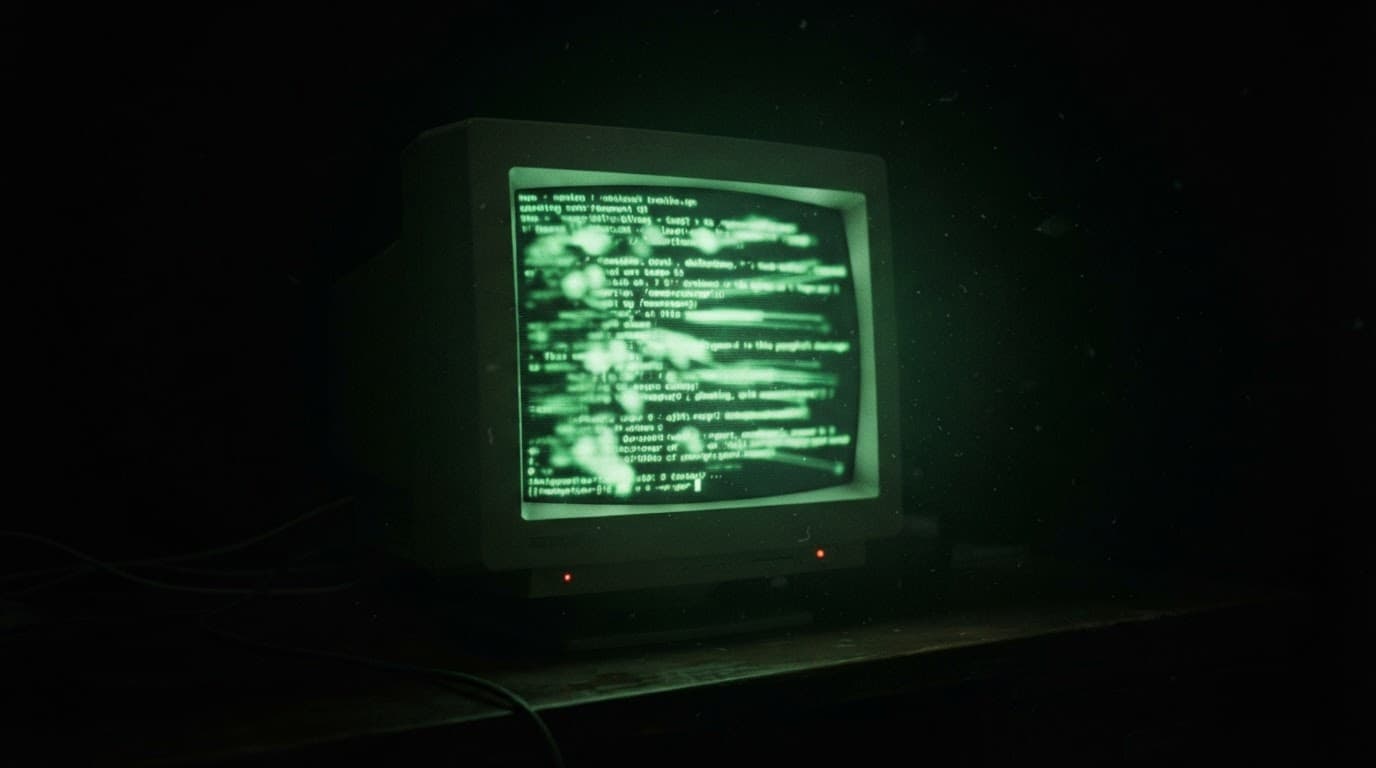
This article uses both genuine archival and on-site photographs and AI-generated images and video produced to convey the mood of the story.

Comments
No comments yet — leave the first one.