Say the word "Illuminati" and a whole picture assembles itself instantly: a shadow board of billionaires and bloodlines, a pyramid with a single glowing eye, a hand signal thrown by a pop star mid-concert, a plan running quietly under every war and every election. It is one of the most recognizable conspiracy theories on Earth, and it has been growing for more than two hundred years.
Here is the strange part. Underneath all of it sits something real — but almost comically small. The original Illuminati was not an immortal cabal. It was a secret club of Enlightenment intellectuals in Bavaria, founded by a frustrated university professor, and it survived for roughly nine years before the government crushed it out of existence. Everything that came afterward — the dollar bill, the celebrities, the New World Order — is what people built on top of a corpse.
This is the first file in our Conspiracy Files series, and the Illuminati is the perfect place to start, because it lets us do the one thing these theories hate most: put the documented history in one column and the invented mythology in another, and look at exactly where the line runs between them.
I have been building this archive long enough to notice which files are hardest to keep clean, and this is the worst of them. Most of what I collect resists documentation; the Illuminati suffers the opposite problem. The Bavarian state seized the order's private correspondence and then printed it — the government published the secret society's own papers to humiliate it. I have spent more time than I should sitting with that decision. Everything that came after grew out of an act of disclosure, not concealment.
Part 1 — The Illuminati That Actually Existed
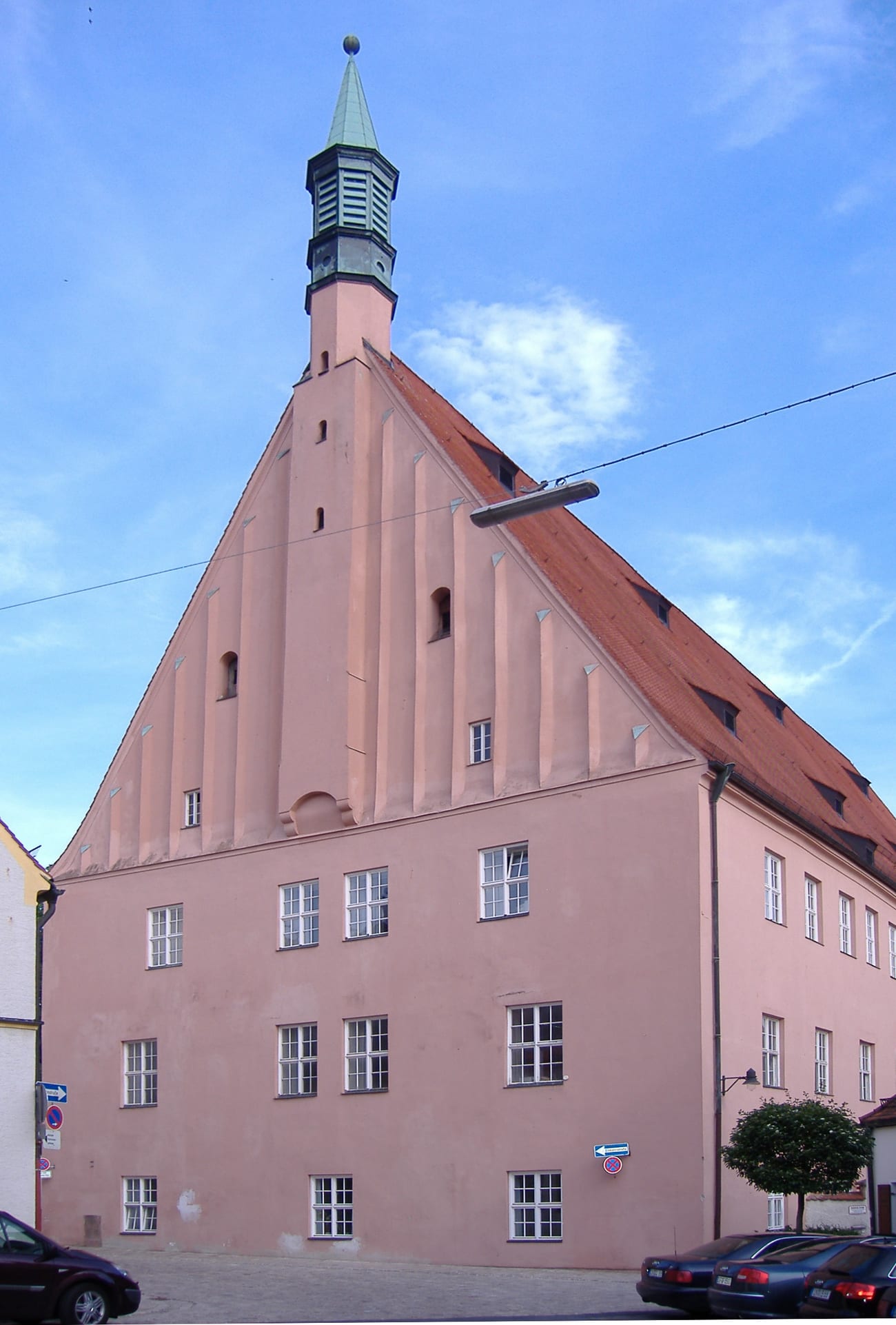
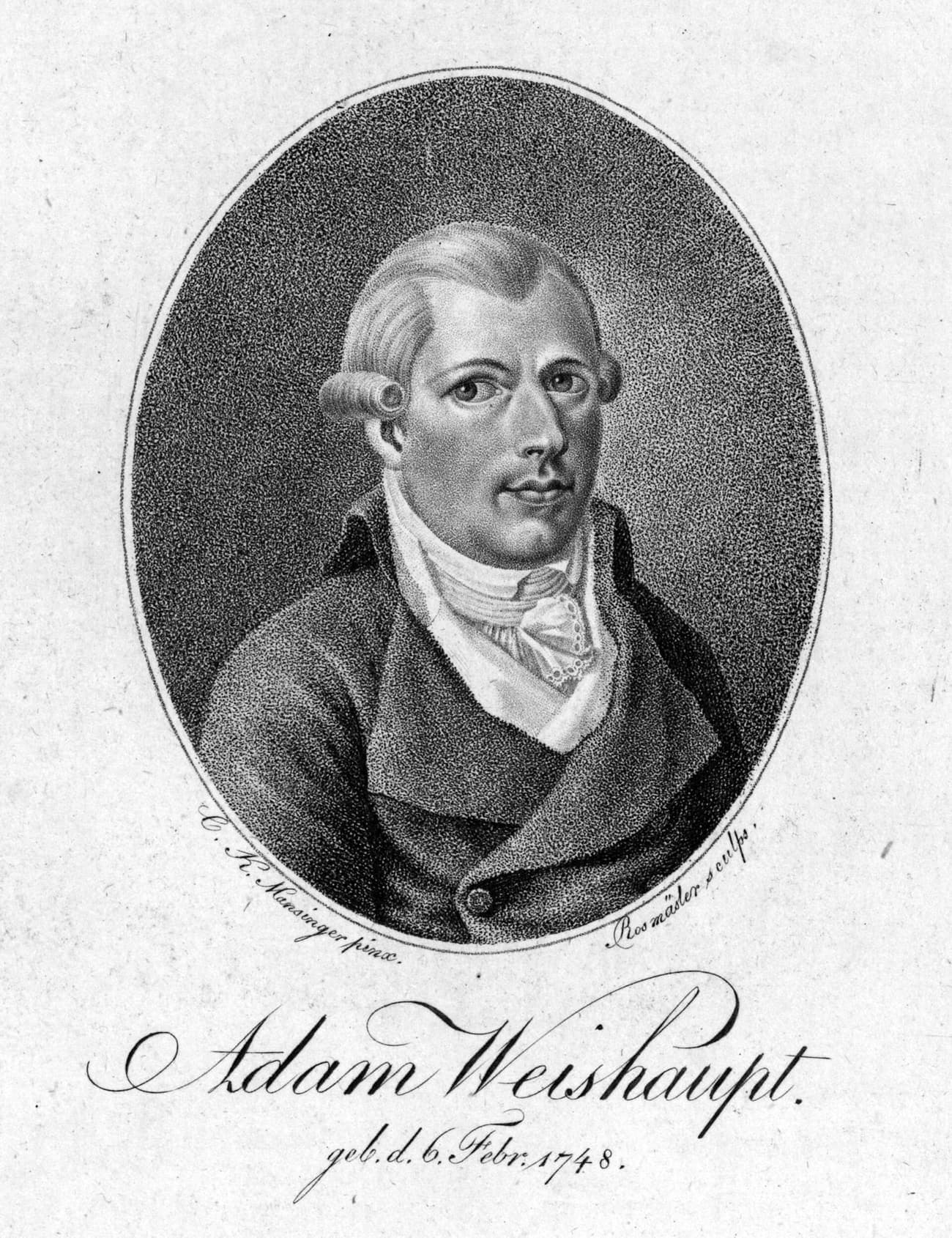
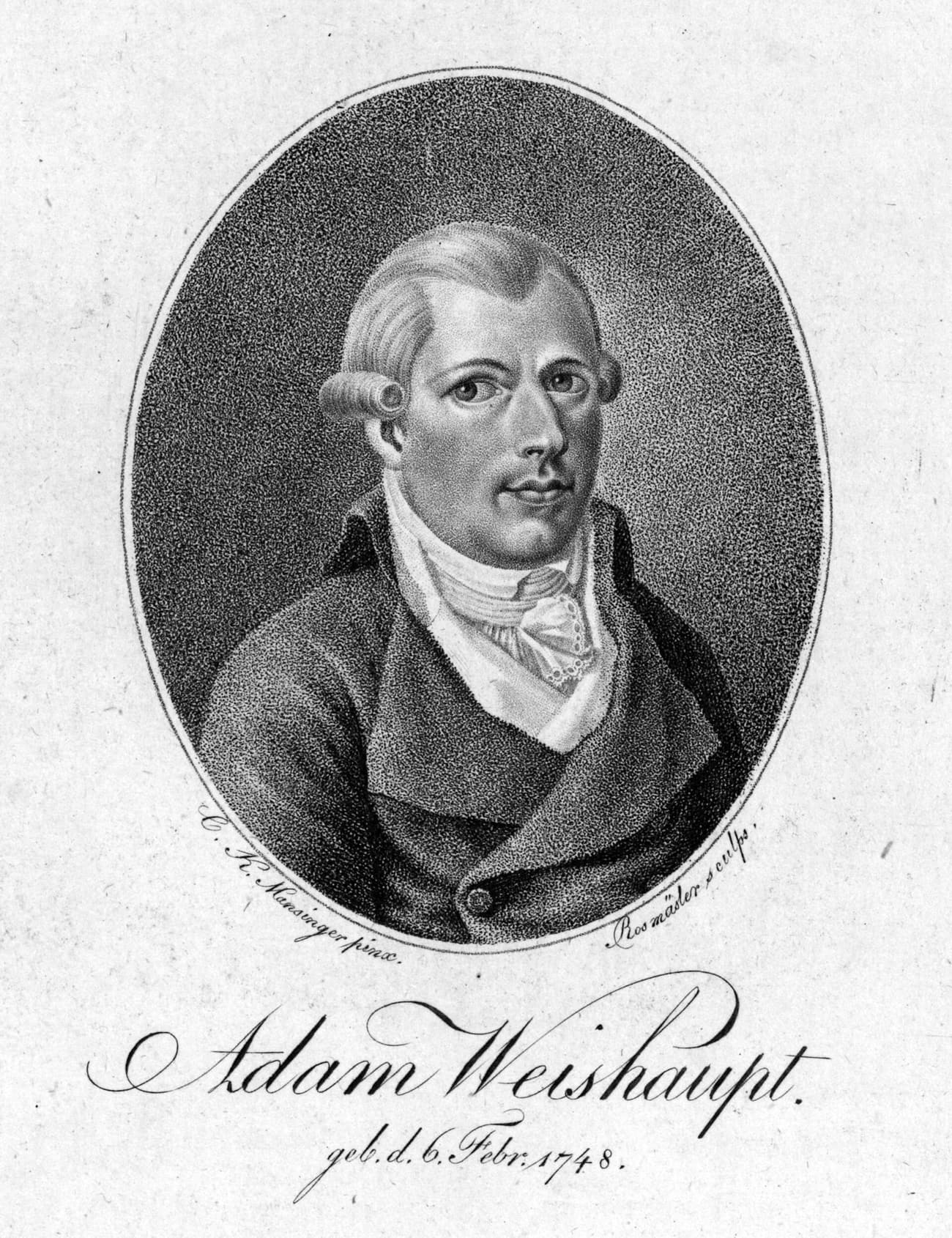
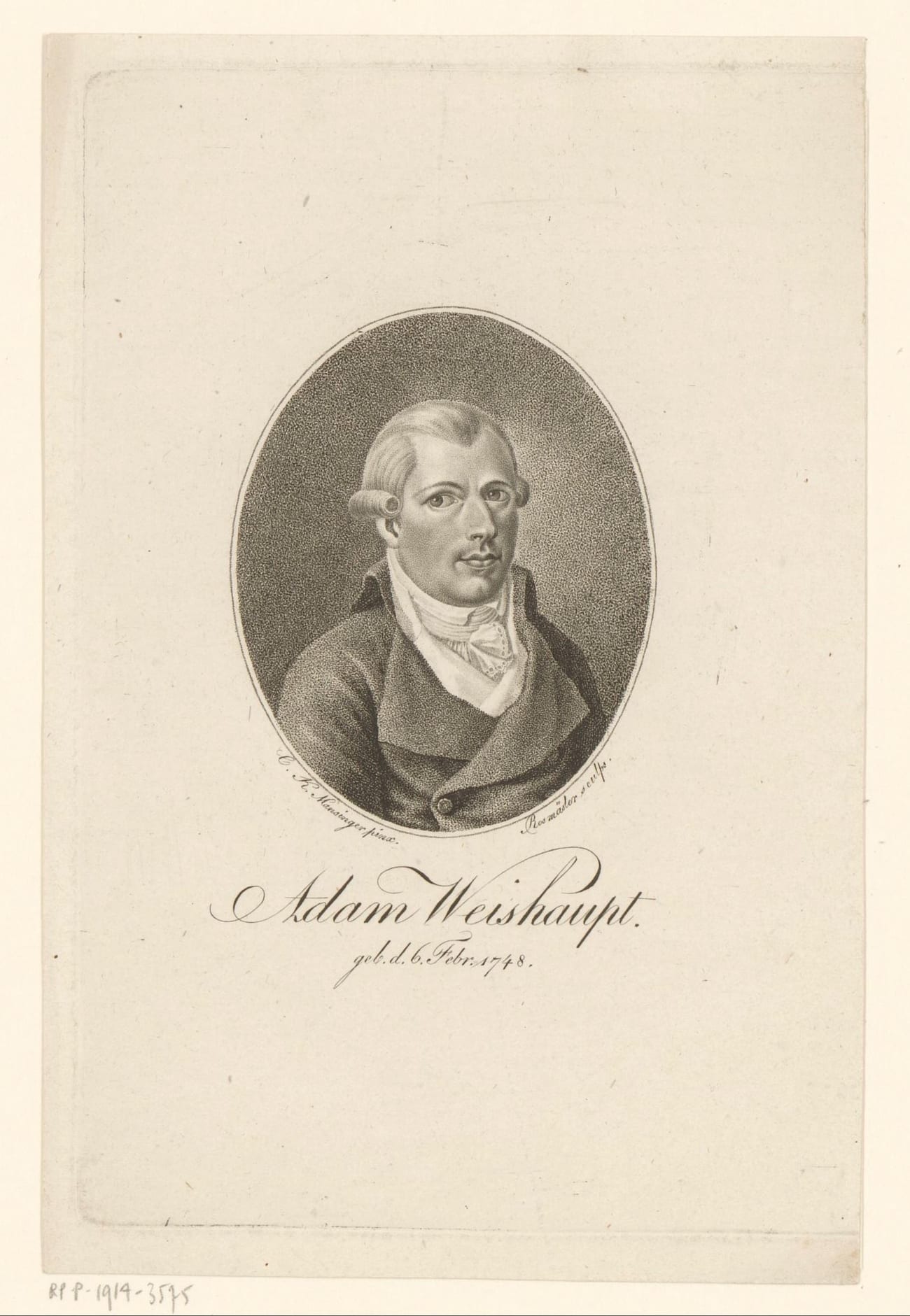
On May 1, 1776, in the university town of Ingolstadt in the Electorate of Bavaria (today part of southern Germany), a man named Adam Weishaupt founded a society. Weishaupt was a professor of canon law — church law — at the University of Ingolstadt, which is worth pausing on, because the popular image of the Illuminati as anti-religious extremists starts with a man who taught the legal machinery of the Catholic Church for a living.
He began with a tiny group. Depending on the account, the founding circle numbered around five members. That is the entire seed of the world's most famous secret society: a professor and a handful of followers.
Their goals were products of their moment. The late 18th century was the height of the European Enlightenment — an intellectual movement that prized reason, science, and human progress, and that was increasingly impatient with superstition, with the heavy hand of the Church over public life, and with the unchecked power of absolute monarchs. Weishaupt's society was built to advance exactly those ideas. Its members wanted to spread rational thought, promote secular education and morality, and cultivate people who could push society toward Enlightenment values from within. It was, in essence, a self-improvement and influence network for intellectuals who felt the old order was standing on their necks.
That is a genuinely radical program for its time — but "radical" in the sense of Enlightenment philosophy, not in the sense of a plot to seize the planet. There was no scheme for world domination. There was no timeline for global government. There was a secret club of educated men who wanted to change how their society thought, and who correctly understood that saying so out loud in Catholic Bavaria could end their careers or worse.
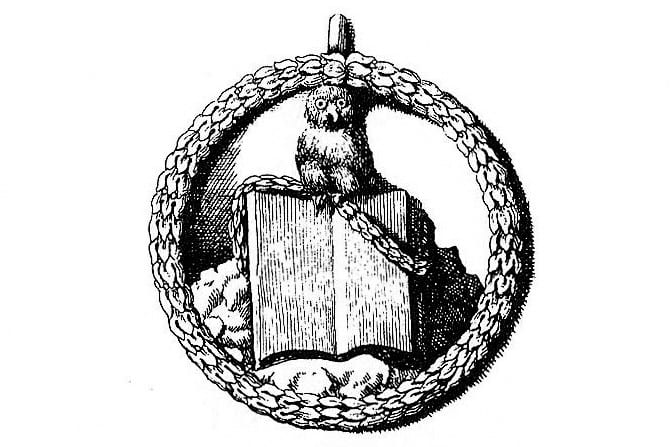
The secrecy came with theatrical trappings that the modern legend feeds on happily. The society adopted the owl of Minerva — the Roman goddess of wisdom — as a symbol, a fitting emblem for a group that fancied itself the enlightened few who could see in the dark. Members took classical pseudonyms so they could correspond without exposing their real identities: Weishaupt himself went by "Spartacus," after the Roman slave who led a revolt. The structure borrowed the layered degrees and initiation of Freemasonry, with ranks a member ascended as he proved himself.
And the club grew. From that founding handful, membership climbed over the next decade to somewhere in the range of two thousand people across Bavaria and beyond, drawing in nobles, professionals, and intellectuals. It even brushed against genuine cultural royalty: the great German writer Johann Wolfgang von Goethe is reported to have been associated with the order. That association is exactly the kind of fact conspiracy theorists love — but note what it actually shows. It shows the Illuminati was fashionable among a slice of the German intelligentsia, not that it was steering history.
So the real Illuminati is: an Enlightenment secret society, born May 1, 1776, in Ingolstadt, founded by a canon-law professor, symbolized by an owl, populated by men with Roman code names, grown to a couple thousand members, briefly touching figures like Goethe. Ambitious, secretive, idealistic. And, crucially, mortal.
Part 2 — The Fall: Nine Years and Out
Secret societies have a structural weakness: they depend on secrecy, and secrecy depends on everyone keeping quiet. The Illuminati could not.
The order was riven by internal conflict — clashes over direction, personality feuds, and disputes between Weishaupt and other senior members. Disillusioned insiders began to defect, and defectors talk. Some carried their grievances, and their knowledge of the society's inner workings, straight to the authorities.
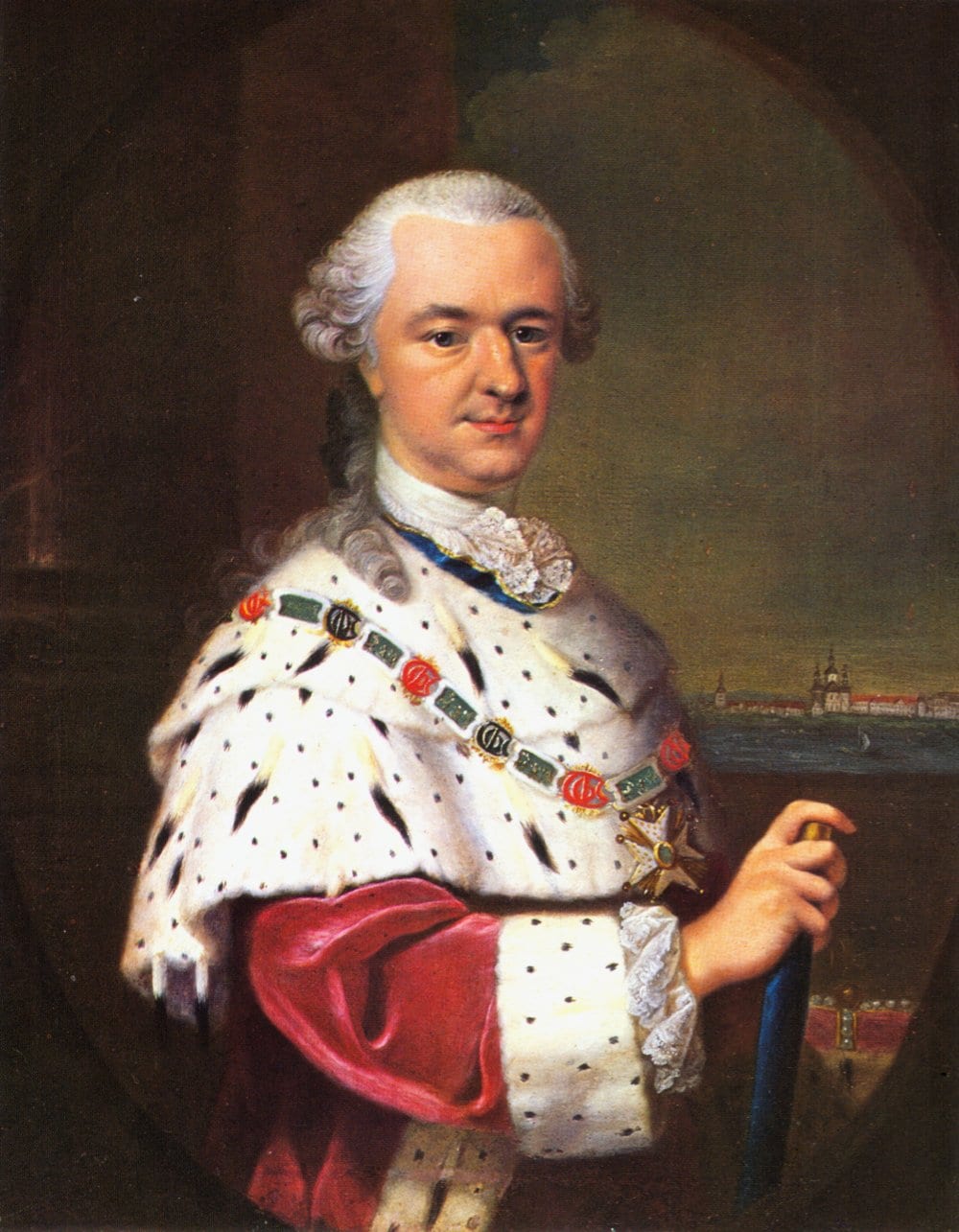
The authorities were already nervous. Charles Theodore, the Elector of Bavaria, encouraged by the Catholic Church, moved against secret societies. Through a series of edicts in the mid-1780s, the Bavarian state outlawed the Illuminati along with Freemasonry and similar groups. The decisive blow landed in 1785. The society was banned, and this time the ban had teeth.
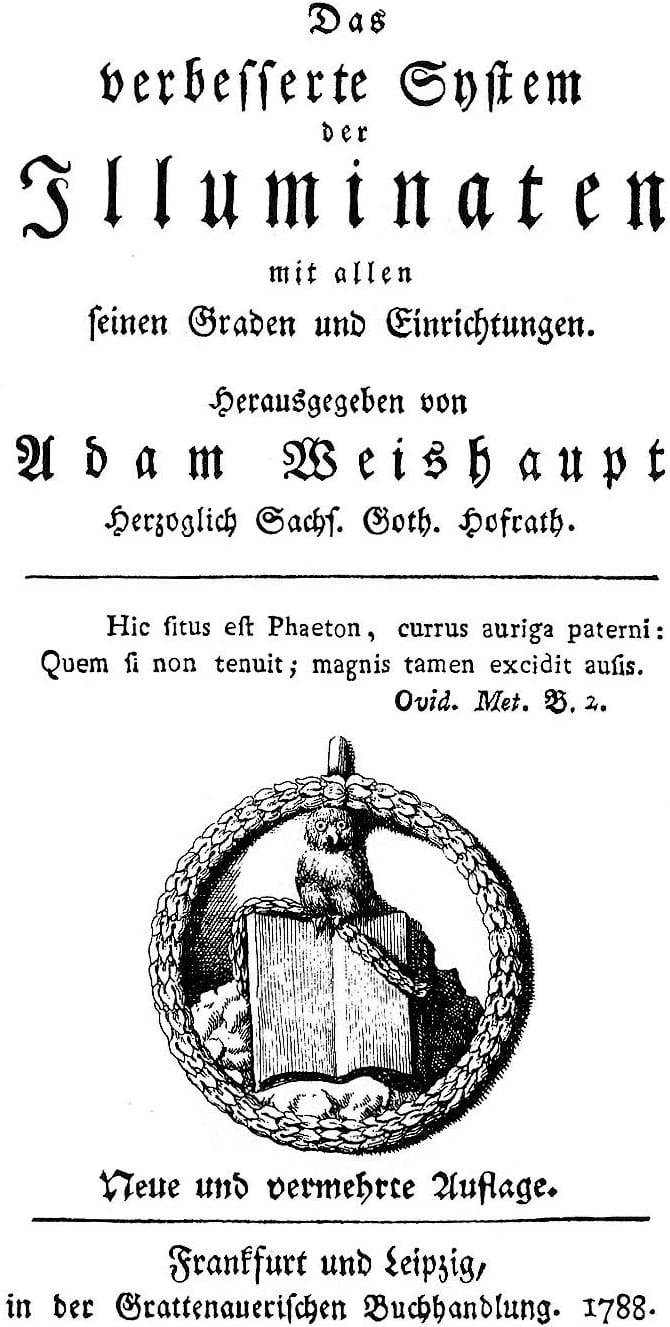
Then came the part that, ironically, guaranteed the Illuminati's immortality as a legend. When the Bavarian government moved against the order, it seized the society's internal documents — correspondence, membership material, writings laying out its aims and methods — and it published them. The state put the Illuminati's private papers into the public record specifically to discredit the group and warn the population away from it.
It worked in the short term and backfired forever after. Weishaupt lost his university position and fled Bavaria, living out the rest of his life in exile. The organization, as an organization, collapsed. And here is the point every serious historian returns to: there is no credible evidence that the Bavarian Illuminati survived past its suppression in the 1780s. It did not go underground and quietly conquer the world. It was exposed, outlawed, gutted, and it died — roughly nine years after it was born.
But now its secret papers were printed and circulating across Europe. Anyone could read the ambitious, high-flown language of a defunct society that had genuinely tried to influence its world. The body was in the ground. The ghost was in the libraries.
Part 3 — How a Dead Society Became an Immortal Legend
To understand how a nine-year study club became the master villain of two centuries of conspiracy theory, you have to understand what happened four years after the Illuminati fell.
In 1789, the French Revolution erupted. The monarchy that had ruled France for centuries came apart; a king would eventually go to the guillotine; the entire social order that Europe's elites assumed was permanent was suddenly, violently, up for grabs. For the aristocrats, clergy, and monarchists watching from across the continent, the Revolution was not just a political event. It was terror. Their world was ending, and they did not understand why.
Frightened people in that position tend to reach for a specific kind of explanation. Not "our system had deep problems that finally broke it" — that answer implicates them. Instead: someone did this to us. A hidden hand. A conspiracy.
Into that need stepped a French Catholic priest, the Abbé Augustin Barruel. In 1797 he published a work arguing that the French Revolution had not been a spontaneous social upheaval at all, but the product of a long, deliberate conspiracy by Enlightenment thinkers, Freemasons, and — the keystone of his theory — the Illuminati. In Barruel's telling, Weishaupt's banned society had not really died. It had gone underground, infiltrated Freemasonry, and orchestrated the fall of the French monarchy from the shadows.
It was a sensational claim, delivered in an atmosphere of maximum fear, and it became a bestseller. Barruel's book, along with similar works by other authors in the same years, gave a panicking European elite exactly the villain it wanted: not their own failures, but a shadowy foreign cabal of intellectuals pulling the strings.
This is the moment the modern Illuminati is born — not in Ingolstadt in 1776, but in the reactionary literature of the 1790s. And notice the move that makes the whole thing work, because it is the same move every later version reuses: "The Illuminati did not disband. It only went underground." That single sentence resurrects a dead organization and makes it available for any explanation you need. Every subsequent theory — through the 19th century, through the 20th, into today — is a variation on Barruel's original template. Change the target, keep the machinery: a secret society that supposedly never really died, working invisibly behind whatever event currently frightens people.
Part 4 — The Eye on the Dollar Bill
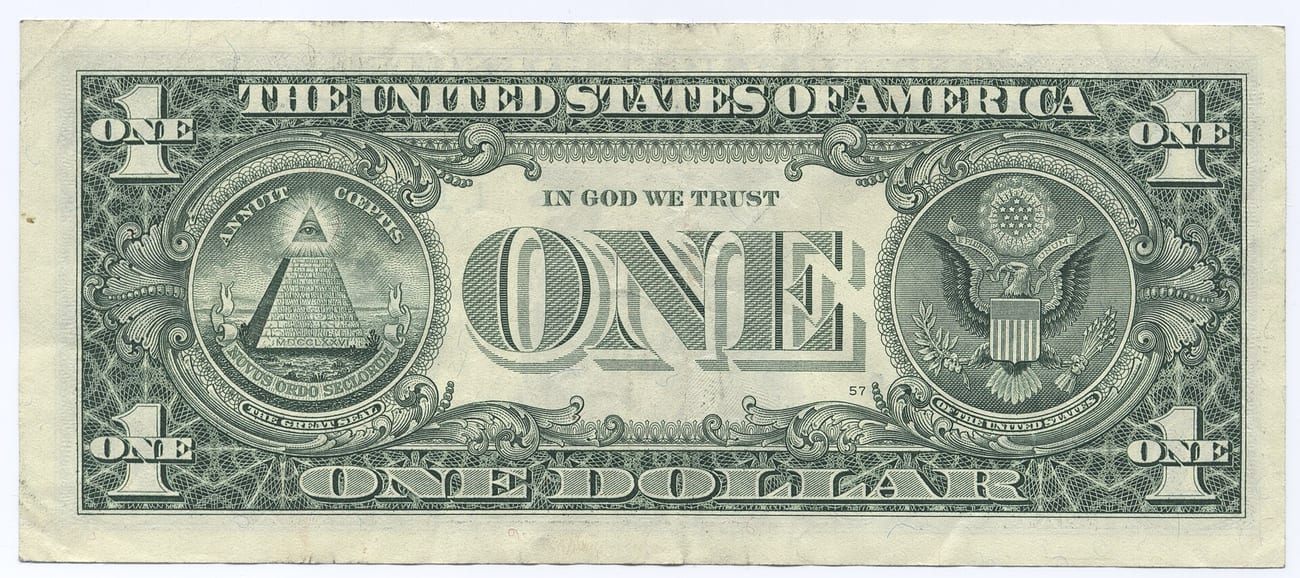
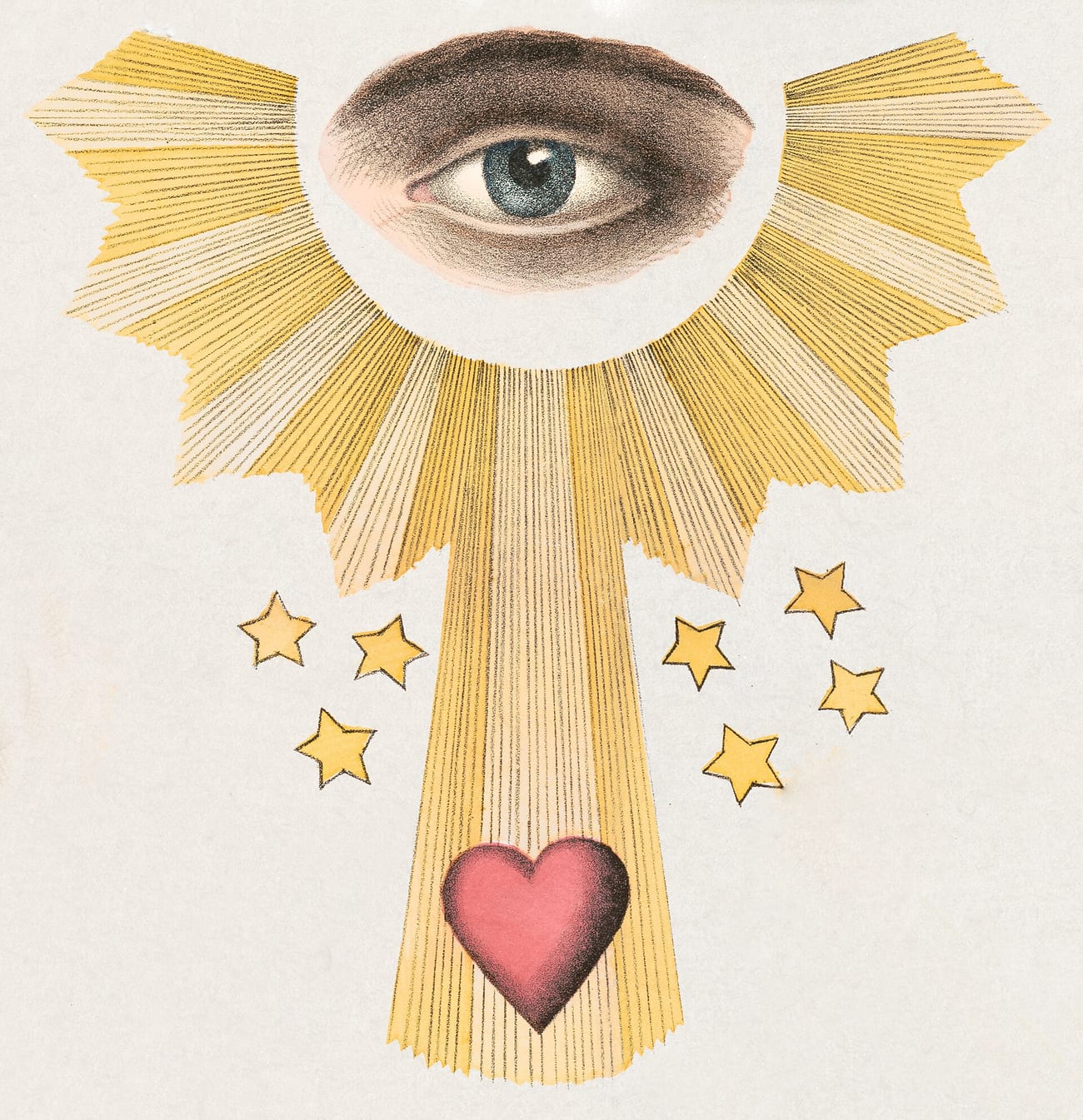
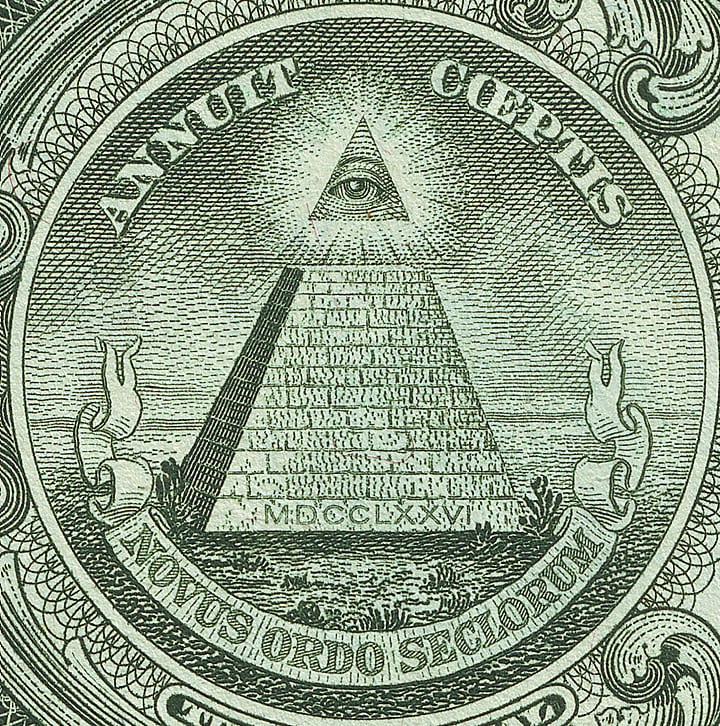
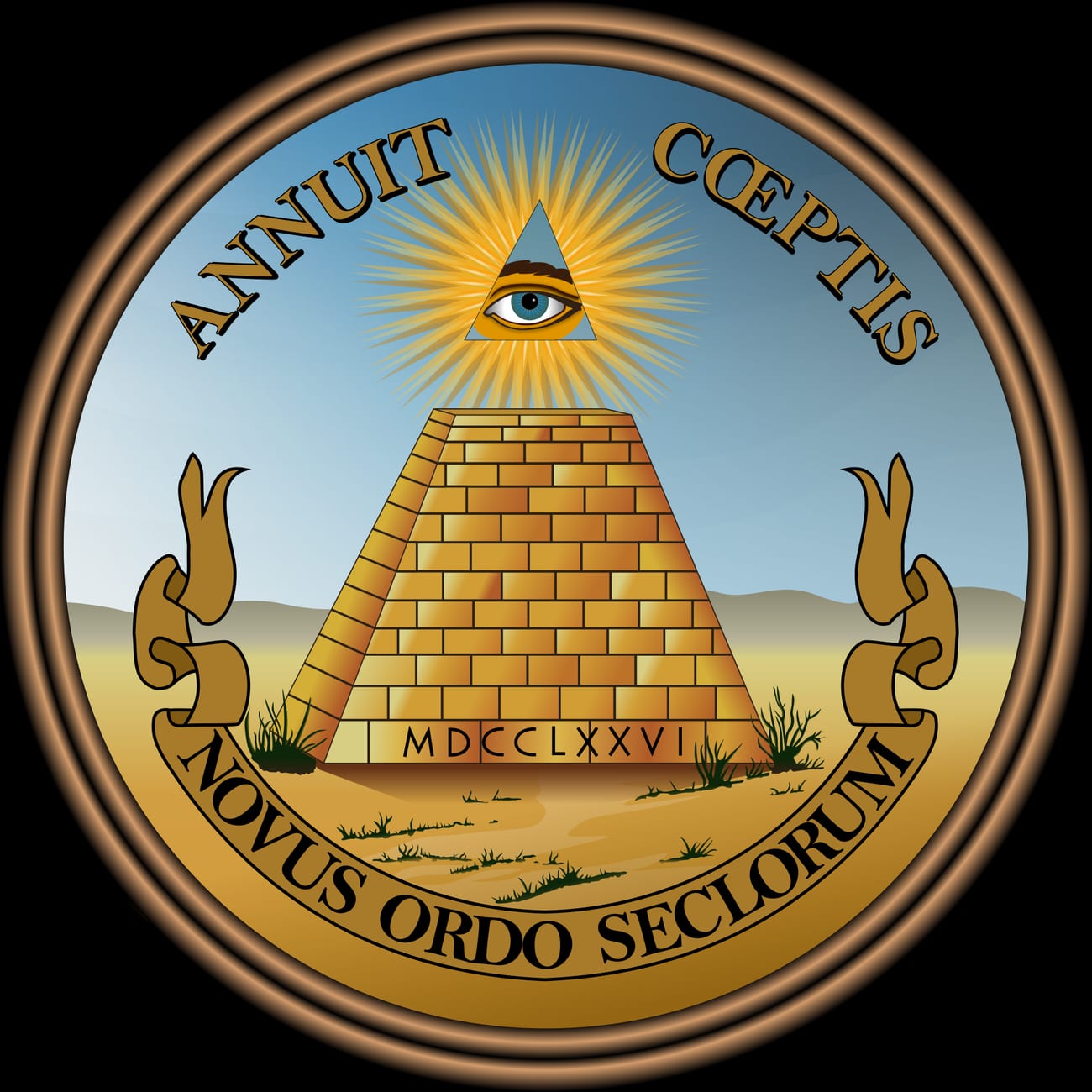
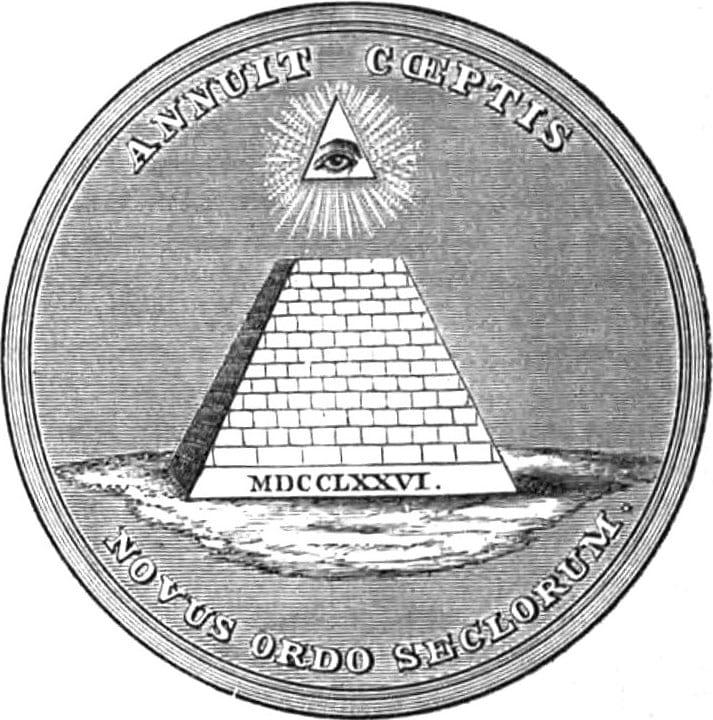
If there is one image that fuses "Illuminati" into everyday life, it is the back of the United States one-dollar bill: an unfinished pyramid, and floating above it, inside a triangle, a single radiant eye. To millions of people this is the smoking gun — proof that the secret order stamped its mark on the world's most powerful currency. So let us take it apart carefully, because the facts here are unusually clean.
The image comes from the Great Seal of the United States, whose design was completed in 1782. The eye above the pyramid is called the Eye of Providence. Above it the seal reads Annuit Cœptis ("He has favored our undertakings"), and on the ribbon below the pyramid, Novus Ordo Seclorum — "a new order of the ages." That last phrase is catnip for theorists, who read it as "New World Order," a coded announcement of the plan. In its actual 18th-century meaning it was a statement that a new era in human affairs had begun with the founding of the American republic — a proud sentiment, not a sinister one.
Now the crucial fact: the Eye of Providence is not an Illuminati symbol. It is far older, and its origins are explicitly Christian. In European religious art, an eye set within a triangle was a well-established emblem of God — the all-seeing eye of divine providence, watching over humanity, with the triangle representing the Holy Trinity. It appears in the decoration of churches across Europe. It shows up, strikingly, atop the original 1789 publication of France's Declaration of the Rights of Man and of the Citizen — a founding document of human liberty, not a conspiratorial one.
In other words, when the designers of the Great Seal reached for an eye in a triangle in 1782, they were reaching for a common, recognizable symbol of God's watchful favor over a new nation. They were using visual language that any educated European of the era would have read as religious and providential. And there is no documented connection between the men who designed the Great Seal and the Bavarian Illuminati. The theory requires that link to exist; the historical record does not supply it.
The dollar-bill eye, then, is a textbook example of how the Illuminati legend actually operates. Take a real object (the Great Seal). Take a real symbol with a real history (the Eye of Providence). Strip away the documented meaning. Reassign it to the secret order. The result feels like evidence — it is right there in your wallet — but every factual thread in it points somewhere other than the Illuminati.
Part 5 — The Merger With Freemasonry
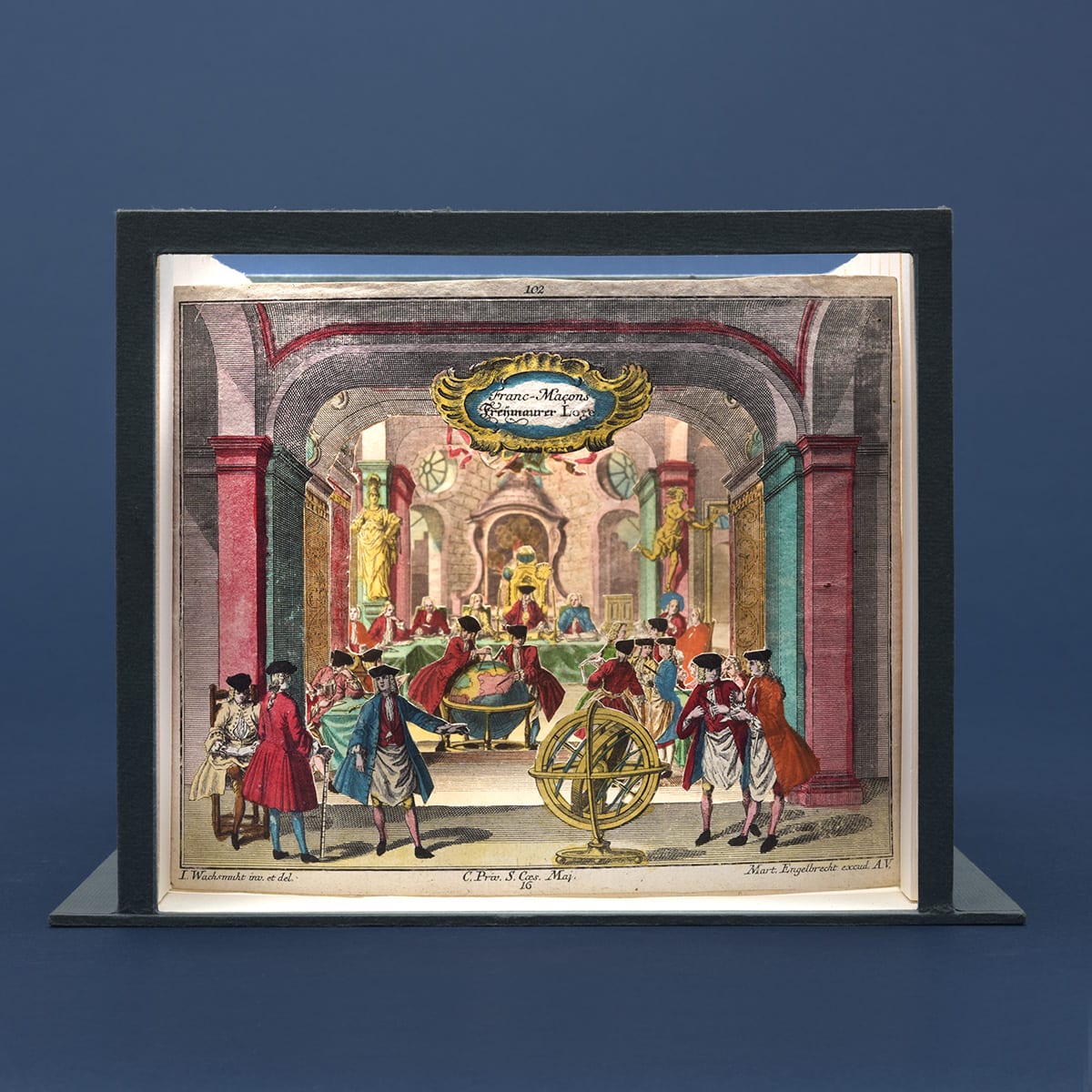
You cannot tell the Illuminati story without the Freemasons, because in the popular imagination the two have fused into a single blur of aprons, handshakes, and hidden power. Untangling them matters.
Freemasonry is real, and unlike the Illuminati it never died. It is a fraternal order with roots in the stonemasons' guilds of the medieval and early-modern period, organized into local lodges, using ritual, symbolism, and degrees of initiation. It has existed for centuries and still exists, with millions of members over its history. It is genuinely a secretive brotherhood in the sense that it has private rituals and internal signs — and that alone has made it a magnet for conspiracy theories for just as long as the Illuminati.
Where the story gets combustible is the overlap between Freemasonry and real power. Many of the founders of the United States were Freemasons — George Washington, the first president, is the most famous example, and he was photographed, or rather depicted, in Masonic regalia; the imagery of Washington as a Mason is well documented. Later, President Harry Truman was a prominent, openly avowed Freemason, and photographs of him in full Masonic dress exist and circulate widely. These are not secrets; the men in question were public about their membership.
Add to this the fact that Barruel's original theory already claimed the Illuminati had hidden itself inside Freemasonry, and you have the recipe for a permanent merger in the public mind. If powerful people — presidents, statesmen — belonged to a brotherhood with private rituals, and if a notorious secret society was said to be lurking inside that brotherhood, then every Masonic handshake becomes a thread you can pull toward a grander conspiracy.
Modern lore piles on newer institutions in the same spirit. The Bohemian Grove, a private California retreat where wealthy and powerful men gather, features a large stone owl as the centerpiece of a theatrical ceremony — and theorists seize on that owl, tying it back to Minerva's owl of the original Illuminati, as if the symbol were a signature passed down through the centuries. What all of this actually demonstrates is narrower and more human: powerful people have always formed exclusive clubs with private customs, and exclusivity plus secrecy plus symbolism is an irresistible feedstock for the conspiratorial imagination. The existence of elite fraternities is a fact. The claim that they are all fronts for an immortal Illuminati is not.
Part 6 — The Celebrity Illuminati
Somewhere in the 2000s, the Illuminati underwent its strangest mutation yet. It moved from the smoke-filled back rooms of history into music videos and awards shows. And here we need to be especially careful and especially clear, because this is where the theory shifts from making claims about the dead to making claims about living, named people — which means everything in this section describes unproven allegations made by fans and conspiracy theorists, not established fact, and the artists themselves have consistently denied or openly mocked them.
The pattern took hold in hip-hop and pop. Jay-Z and Beyoncé became probably the most persistently accused couple in the mythology, with theorists reading hidden Illuminati signaling into hand gestures, lyrics, and imagery. Jay-Z's diamond-shaped hand sign — which he has said refers to his Roc-A-Fella record label — gets reinterpreted as an Illuminati triangle. Both have brushed the accusations aside, and Jay-Z has joked about them in his music.
Madonna's 2012 Super Bowl halftime show, with its heavy Egyptian and ritual-flavored staging, was read by believers as a mass occult ceremony broadcast to the world. Katy Perry, asked about the rumors, leaned into the absurdity and joked that she was only sad the Illuminati apparently existed and hadn't invited her. Lady Gaga, Kanye West (Ye), and Rihanna have all been folded into the theory at various points, their symbolism, videos, and personas mined for supposed proof of membership.
Every one of these cases follows the same logic, and it is worth naming plainly: an artist uses provocative, occult, or triangular imagery — often deliberately, because provocation sells and mystery is good branding — and theorists treat that imagery as a confession. The artists, for their part, deny involvement, ignore it, or turn it into a punchline. There is no credible evidence that any of these performers belong to a secret society controlling world events. What there is, is a feedback loop: the theory makes stars more mysterious, mystery sells records, and some artists have happily played with the imagery precisely because the rumor mill amplifies them. The celebrity Illuminati is best understood as pop culture's remix of a very old story — and, to be clear, as a set of allegations the named individuals reject.
Part 7 — Blaming the Illuminati for History Itself
Once you have an invisible, immortal, all-powerful secret society, it becomes the universal answer key. Any large, traumatic, or hard-to-explain event can be — and has been — attributed to it.
The assassination of President John F. Kennedy in 1963 is a favorite. So are the terrorist attacks of September 11, 2001. Wars, financial crashes, pandemics, the deaths of prominent figures — across decades, the Illuminati (often merged with other shadow-power labels like the "New World Order") has been named as the true hand behind them.
And in every one of these cases, the official investigations reached ordinary, non-Illuminati conclusions. Formal government inquiries, commissions, and expert investigations examined these events and produced explanations grounded in the available evidence — explanations that do not involve a secret order of Enlightenment descendants running the planet. The theorists' response to those findings is instructive, and it points directly at the trick that keeps the whole thing alive: the official conclusion is simply folded into the conspiracy. The investigation didn't miss the Illuminati; the investigation was controlled by the Illuminati. The absence of evidence becomes evidence of a cover-up.
Why the Theory Never Dies
That last move is the secret of the Illuminati's immortality, and it is worth stating precisely, because it is the same structural flaw at the heart of nearly every grand conspiracy theory.
The Illuminati theory is unfalsifiable. It is built so that no possible observation can ever disprove it. Find a document, a symbol, a handshake, a suggestive lyric? That is evidence the Illuminati is real and everywhere. Find nothing at all — no records, no proof, no trace? That is evidence too — proof of how perfectly the Illuminati hides, how total its control, how flawless its secrecy. A claim that is confirmed equally by evidence and by the absence of evidence can never be tested and never be beaten. It is not a theory in the scientific sense at all. It is a machine for converting anything into confirmation.
And it runs on a very specific fuel, which is where we end. The Illuminati legend is fact, plus fact, plus fact — plus imagination. The professor was real. The secret society was real. The owl, the code names, the seized documents, the Great Seal, the Eye of Providence, the Masonic presidents, the provocative pop stars — every individual brick is a genuine, verifiable thing. What is invented is the mortar: the connective story that binds a defunct 18th-century Bavarian study club to a living, worldwide conspiracy running everything from central banks to halftime shows.
Filing this one taught me something about my own work that I would rather not have learned. An archive is built on the assumption that evidence settles things. Barruel's 1797 template dissolves that assumption entirely: under it, my documents are forgeries and my empty folders are proof of concealment. I have cross-checked the record of the order's suppression until I am certain of it, and I understand perfectly well that my certainty is, to a believer, simply the deepest layer of the cover. There is no version of this file that closes.
The true history is arguably stranger and more revealing than the myth. A handful of idealistic academics started a secret society to promote reason against superstition. It lasted nine years, got exposed by its own members, was crushed by the state, and had its private papers published to shame it. And out of that small, failed, thoroughly human episode, terrified people built the most durable conspiracy theory of the modern age — because the story of a hidden hand has always been easier to bear than the truth that history is chaotic, that institutions fail on their own, and that no one, secret or otherwise, is fully in control.
---
All images in this article are historical records — period portraits, engravings, documents, and photographs of the actual places.


Comments
No comments yet — leave the first one.