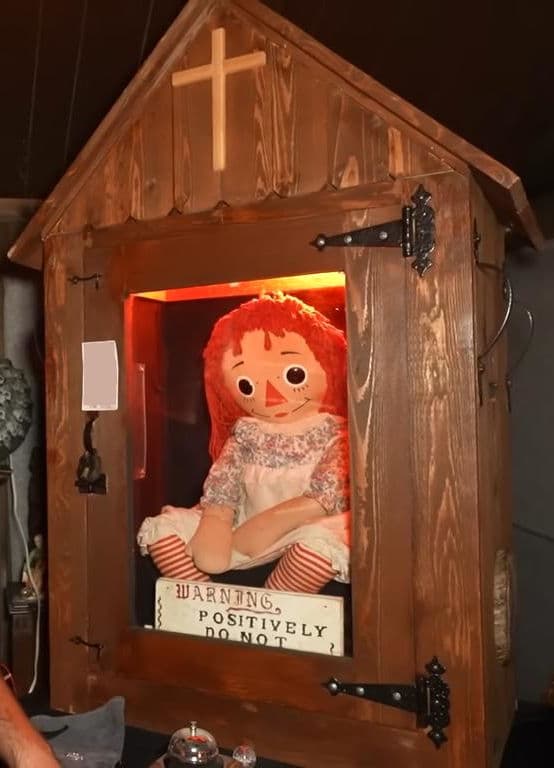
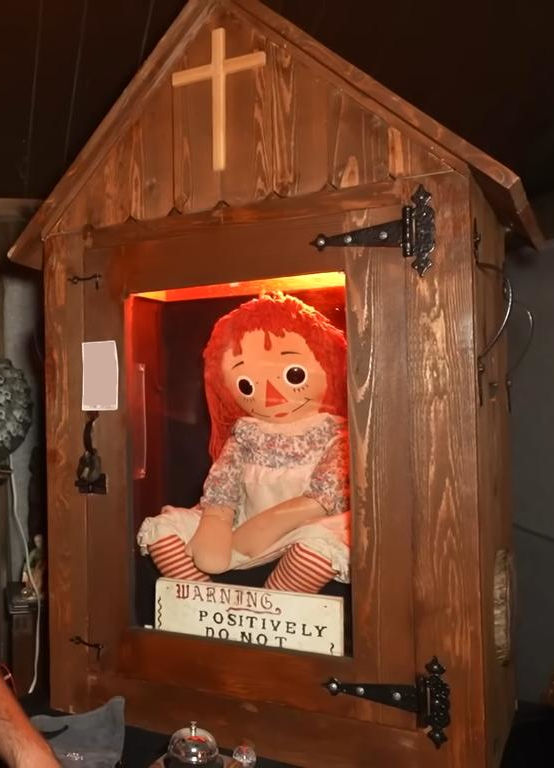
If you know Annabelle from the horror films, you know her wrong. On screen she is a tall porcelain doll with a cracked, sneering face, built to frighten before she does anything at all. The real Annabelle looks nothing like that. She is a Raggedy Ann doll — red yarn hair, a triangle nose, a stitched-on smile — the kind of soft, ordinary toy that American children hugged in their sleep for generations. That is exactly what makes her story unsettling. The most feared object in modern paranormal folklore is not a monster. It is a smiling rag doll that sits in a glass case, and for more than fifty years, the people around her have insisted that things keep happening.
Before we go further, one honest note for readers everywhere: the events below are the account told by the Warren family and their associates. Academics and science writers classify the Annabelle story firmly as folklore, and there are many skeptical rebuttals. This file lays out the legend as it has been told, and keeps the documented facts clearly marked. Whether you believe it is entirely up to you.
I have handled a great many cursed-object files, and most of them collapse the moment you lay the versions beside each other. This one has a detail that does not collapse, and it is not the doll. It is the parchment. Whoever first told this story could have said the notes were on paper — the obvious word, the word a frightened nursing student in a 1970 Hartford apartment would actually reach for. Instead the telling insists on parchment, and then insists there was none in the apartment. That is a strange thing to invent, and I have never been able to decide what it means that someone bothered.
It Began With a Birthday Gift
The story starts in 1970 in Hartford, Connecticut. A nursing student named Donna received a secondhand Raggedy Ann doll as a birthday present from her mother, bought at a hobby shop. She set it on her bed. It was, by every measure, an unremarkable toy — the sort millions of families owned.
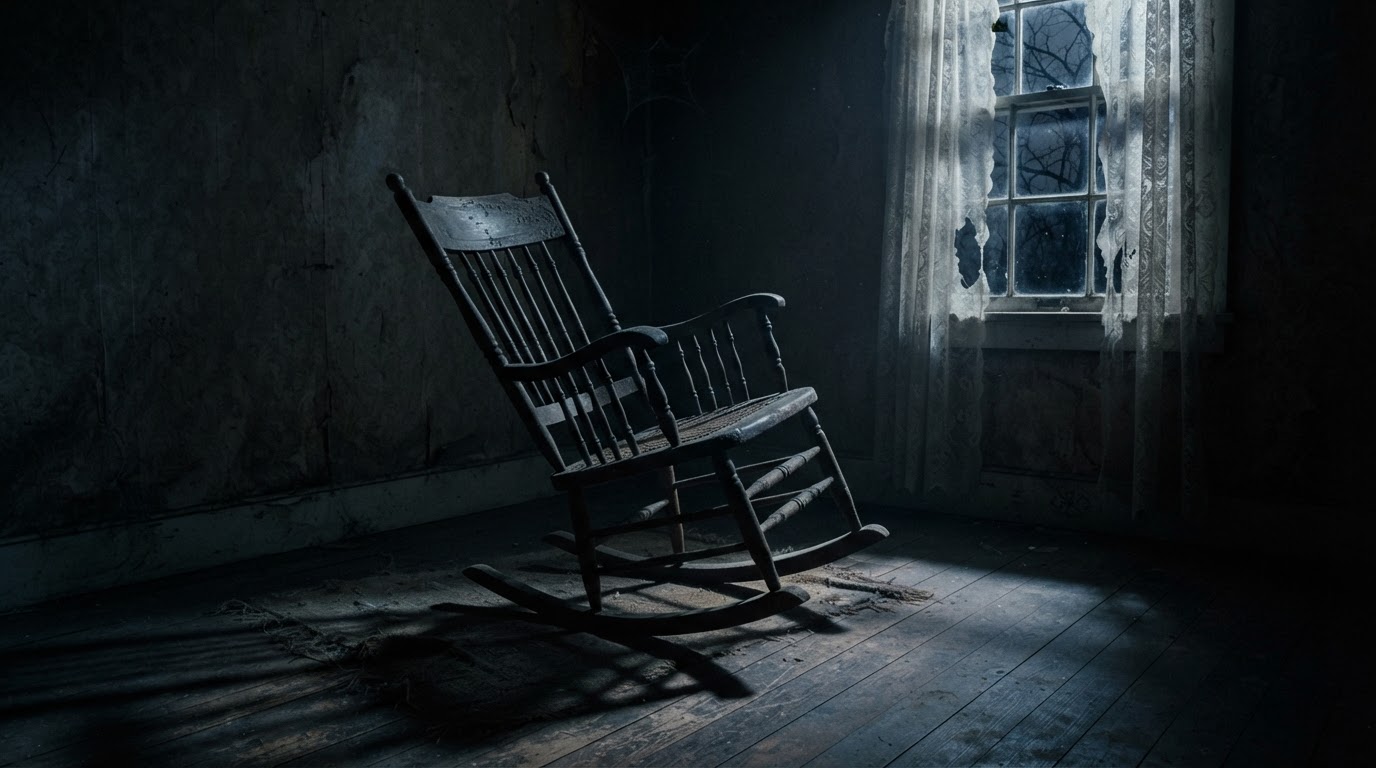
Within days, Donna and her roommate Angie say they began noticing something wrong. The doll would not stay where it was left. They would leave it propped on the bed and return to find it sitting in a chair, or in another room, its posture changed — arms crossed, legs folded, once even leaning upright against a wall. At first they told themselves they were misremembering. Then, they say, the notes started.
Small scraps of paper appeared, marked in what looked like a child's pencil handwriting. One read simply: HELP US. The chilling part, in their telling, was not the message but the material — the writing was on parchment, and there was no parchment in the apartment, and no pencil either. Not long after, Donna says she found what looked like three drops of blood on the doll's chest.
The Medium, and a Fatal Permission
Frightened, Donna and Angie brought in a medium. According to the story, the medium delivered a tragic explanation: the doll was inhabited by the spirit of a seven-year-old girl named Annabelle Higgins, who had died long ago in a field where the apartment now stood, and who simply wanted to be loved and to stay with them.
Donna was a nurse. Her instinct was compassion. She gave the spirit permission to remain in the doll. In the logic of the story, that single act of kindness was the mistake that opened a door — because, the Warrens would later argue, the thing in the doll had never been a little girl at all.
After that, the accounts say, the incidents grew darker. Angie's boyfriend, Lou, had disliked the doll from the start. One night he woke unable to move, feeling as though he were being strangled — and, in the telling, found seven raw claw-like marks across his chest, burning like a wound, that faded completely within two days.
Enter the Warrens
The case was eventually brought to Ed and Lorraine Warren — the self-styled demonologists and paranormal investigators who would become the most famous names in American ghost-hunting, and whose case files loosely inspired The Conjuring film franchise. The Warrens' conclusion, as they told it, flatly contradicted the medium's. There had never been a girl named Annabelle Higgins. What had pretended to be a dead child, they claimed, was a non-human, deceptive presence — and its goal was never the doll. The doll was bait. What it wanted, they said, was a human host.
Ed took the doll away. The Warrens recounted that the drive home went wrong in dangerous ways — the car's power steering failing, the brakes acting up, the engine cutting out on curves — until Ed sprinkled holy water on the doll and the trouble stopped. That is their claim, offered without independent proof, and readers can weigh it as they like. What is not in dispute is that the Warrens took the object seriously for the rest of their lives, and never once treated it as a joke.
Fifty Years Behind Glass
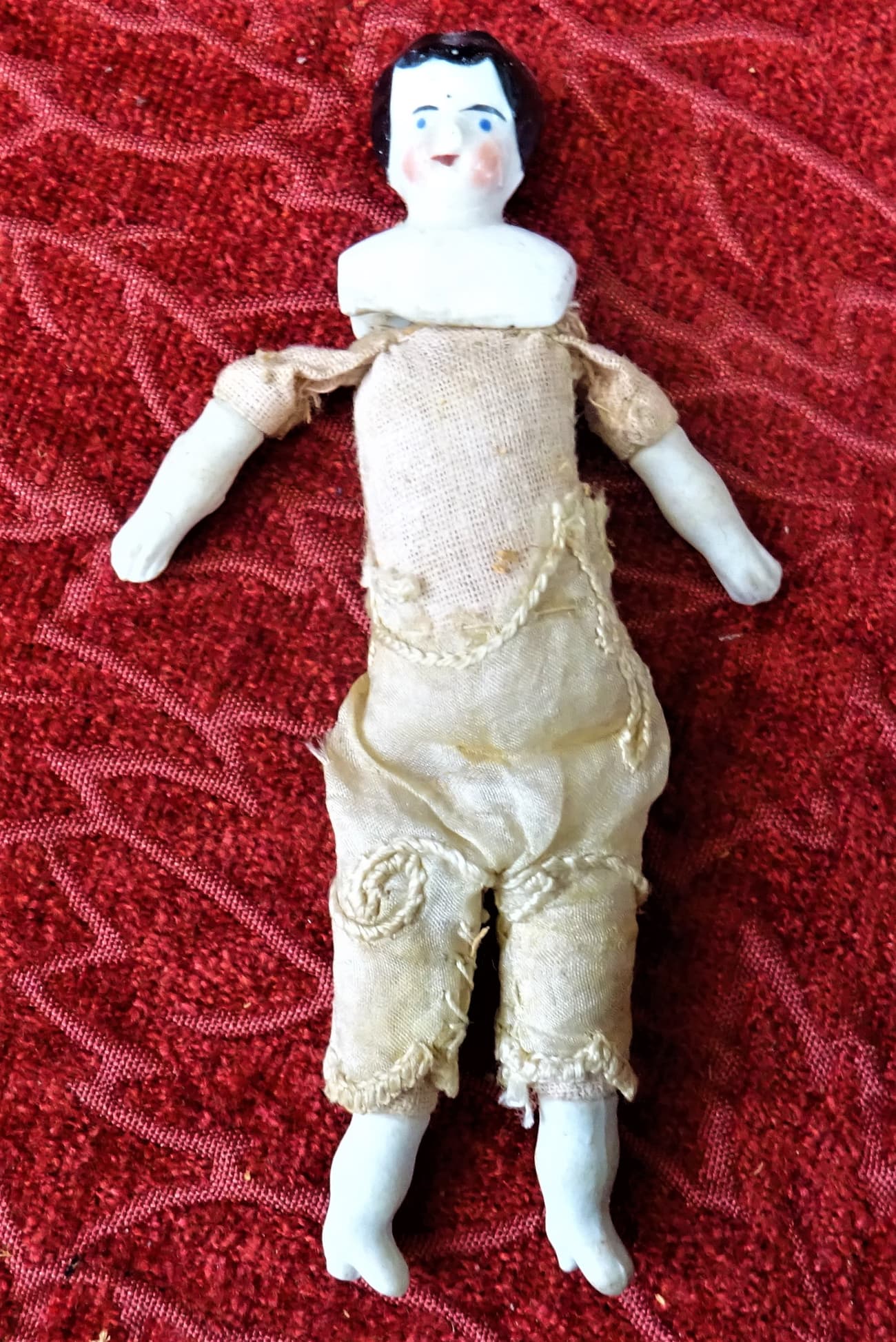
The Warrens placed Annabelle in the Occult Museum they ran out of the basement of their Connecticut home — a collection of objects they said were dangerous or cursed. Annabelle got her own special case: a wooden cabinet with a glass front, blessed by a priest, marked with a cross, and posted with a sign that became famous in its own right:
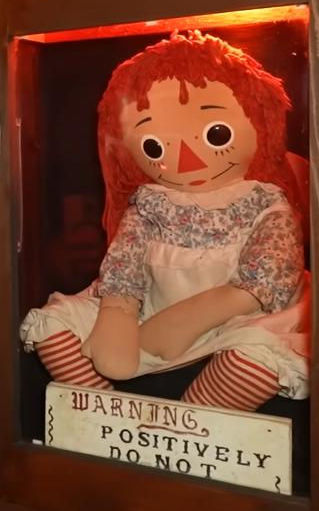
WARNING: POSITIVELY DO NOT OPEN.
Ed Warren's request to visitors was simple. You may laugh, you may disbelieve — but do not touch the case, and do not mock it. The most repeated cautionary tale from the museum concerns a young man who arrived on a motorcycle, banged on the glass, and taunted the doll, daring it to scratch him. Ed asked him to leave. According to the account, hours later the man died when his motorcycle struck a tree on the way home, and his passenger was gravely injured. Like much of the story, this rests on the Warrens' telling rather than documented record — but it became the museum's defining warning.
In 2019, Lorraine Warren died at the age of 92, and the Occult Museum closed (in part over local zoning issues). Annabelle, still in her case, was moved. In the summer of 2020, a rumor that "Annabelle had escaped" spread worldwide and briefly trended online. It was false; the doll was exactly where it was supposed to be. But the episode said something strange about her grip on the public imagination — the entire internet paused to confirm the location of a single rag doll before it could relax.
And Then, Gettysburg — What the Record Actually Shows
Here the file leaves folklore and enters documented news. In 2024 and 2025, Annabelle was taken on a public touring exhibition called the "Devils on the Run" tour, run by the New England Society for Psychic Research, letting fans see the doll up close. The investigator who traveled with her was Dan Rivera, a U.S. Army veteran and longtime associate of the Warren organization who had become the doll's principal caretaker.
On July 13, 2025, while the tour was in Gettysburg, Pennsylvania — a town famous for its Civil War history and its reputation as one of the most "haunted" places in America — Rivera was found dead, alone, in his hotel room. He was 54.
This is where responsible reporting matters, because the internet immediately filled with speculation. According to the Adams County coroner's report, later shared publicly in September 2025, Rivera's death was natural and cardiac-related; he had a documented history of heart issues. Investigators found nothing suspicious. Fellow investigators, including well-known figures in the field, publicly urged fans not to spin his death into a conspiracy, noting that Rivera was a veteran, a husband, and a father of four who genuinely cared about people. One small detail did feed the rumor mill: reports noted the Annabelle doll was not in the hotel room when Rivera was found. That is all the record supports — a man with heart problems died of a heart-related cause, and a famous doll happened to be elsewhere.
What We Know vs. What We Don't
What we can state as documented fact is narrow but real. A Raggedy Ann doll called Annabelle has existed for decades and has been publicly displayed by the Warren organization. In 2025, the doll's caretaker, Dan Rivera, died on tour in Gettysburg, and the official cause was determined to be natural and cardiac-related, with no evidence of foul play. The rumors that swirled afterward were, per the coroner and per Rivera's own colleagues, unfounded.
What we do not — and cannot — verify is the paranormal core of the story itself: the moving doll, the parchment notes, the claw marks, the cursed drive, the motorcycle death. All of it comes from the Warrens' accounts and those close to them, and all of it is classified by scholars as folklore rather than fact. There is no independent, physical proof that Annabelle has ever done anything at all.
And yet the story keeps its power, and the reason is worth naming. Every dramatic claim can be doubted, and most can be explained by suggestion, coincidence, and the very human tendency to find patterns in fear. But strip all of that away and one plain thing remains: for over fifty years, in the presence of this one ordinary smiling doll, people have kept reporting that something was wrong — and the two investigators who knew it best refused, to their deaths, to laugh it off. That refusal is the real engine of Annabelle. Not proof. Doubt that never quite resolves.
Tonight, if there is a doll in your house, you will probably glance at it before you sleep — just to check that it is sitting the way you left it. That small, involuntary glance is the whole story. It is also, honestly, the only thing about Annabelle that has ever been proven: her ability to make you look twice.
The last thing I did with this file was read the 2025 coroner material through a second time, and a third, because I wanted the record to be clean and it is. Cardiac. Documented history. Nothing suspicious in that hotel room in Gettysburg. I put it down satisfied and then caught myself doing what everyone else did that summer — checking the one sentence that says the doll was not in the room. There is nothing in it. A caretaker travels; the exhibit travels separately; the paperwork is dull and complete. I have read it enough times now to know it says nothing at all, and I still go back to it.
---
This article uses both genuine archival and on-site photographs and AI-generated images and video produced to convey the mood of the story.



Comments
No comments yet — leave the first one.